Rabīʿ al-Awwal, Mawlid al-Nabawi and the timeless art of remembering
Every year, as the month of Rabīʿ al-Awwal arrives, millions of Muslims around the world turn their hearts toward one man.
Not a king.
Not a philosopher.
Not a conqueror.
But the final Messenger of Allah ﷻ, Prophet Muhammad ﷺ.
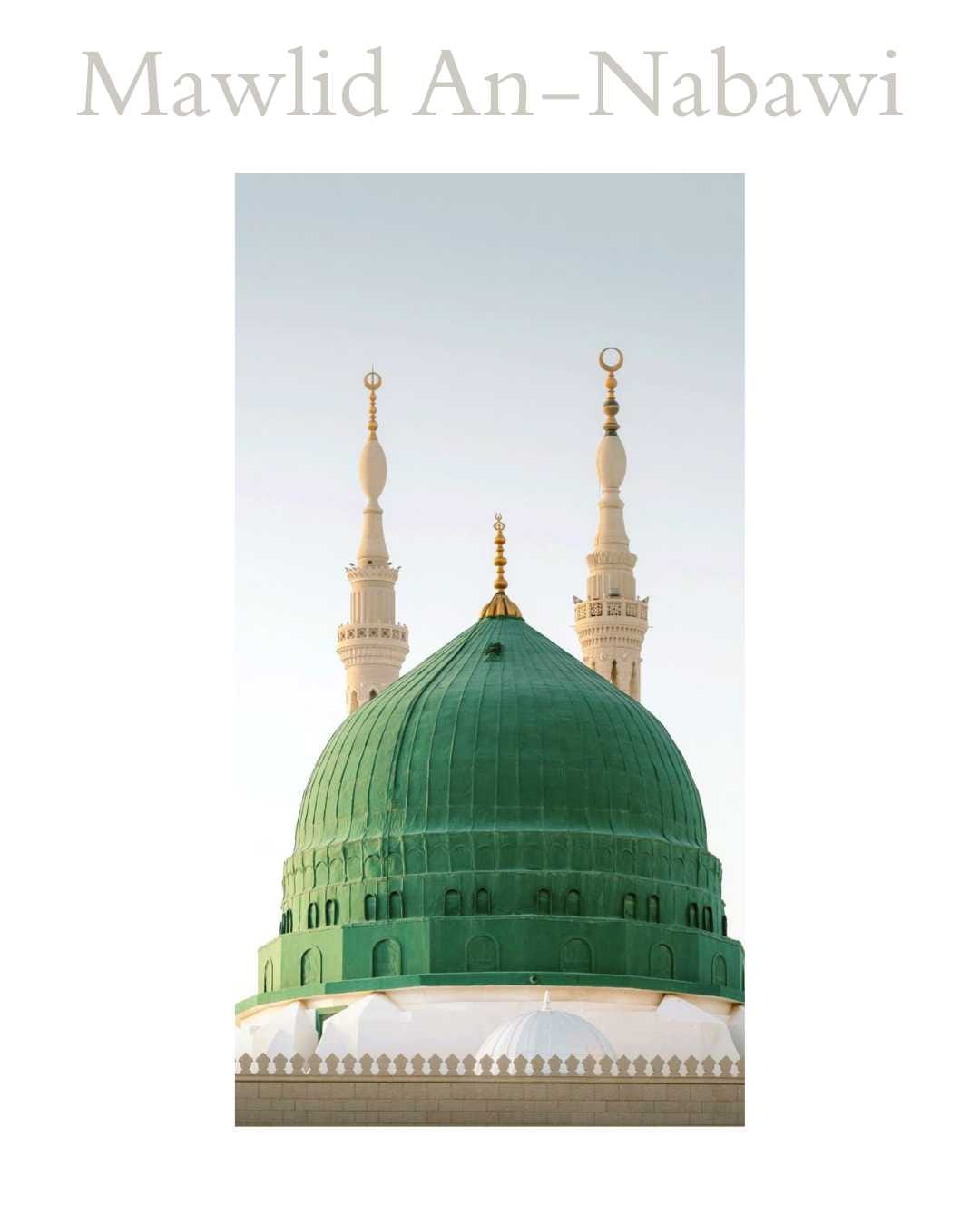
This remembrance is commonly known as Mawlid al-Nabawi (المولد النبوي), literally the birth of the Prophet. In many Sunni communities, it is traditionally associated with the 12th of Rabīʿ al-Awwal, while many Shi’a communities commemorate it on the 17th of Rabīʿ al-Awwal. Because the Islamic calendar follows the lunar cycle, the corresponding Gregorian date changes each year according to the official moon sighting in each country.
For 2026, the 12th of Rabīʿ al-Awwal is expected to fall on Tuesday, 25 August, although the exact date may vary by one day depending on local moon sighting.
Yet beyond the calendar lies a deeper question.
Not “Should Mawlid be celebrated?”
But:
Why does the Messenger of Allah ﷺ continue to inspire more than a billion people, fourteen centuries after his life?
Remembering Before Debating
Every year, the same discussion returns.
Should Mawlid be commemorated?
Is it a religious celebration?
Is it a cultural tradition?
Muslim scholars have expressed different opinions throughout history regarding the forms of commemorating Mawlid al-Nabawi. Some have regarded gatherings dedicated to the Sīrah, remembrance of Allah ﷻ and sending blessings upon the Prophet ﷺ as permissible, provided they remain free from practices contrary to the Qur’an and authentic Sunnah. Others have preferred not to establish a specific annual commemoration, considering that love for the Prophet ﷺ should be expressed through the acts of worship authentically transmitted from him.
These differences exist.
But perhaps they should not become the center of the conversation.
At Islamic Art of Living, we believe another question comes first.
How often do we remember the Messenger of Allah ﷺ?
Because whether a Muslim marks Mawlid with a gathering, a lesson, an act of charity, or chooses not to observe the occasion at all, every believer agrees on one essential truth:
Muhammad ﷺ is the final Messenger sent by Allah ﷻ as a mercy to humanity.
That is where the Ummah stands united.
A Mercy Sent to the Worlds
Allah ﷻ describes His Messenger in words that transcend every culture and every century:
“And We have not sent you except as a mercy to the worlds.”
Surah Al-Anbiyāʾ (21:107)
His mission was never intended for one people alone.
Justice.
Mercy.
Humility.
Patience.
Trustworthiness.
These are not simply historical virtues.
They remain a living model for every generation seeking to live with excellence.
The Sunnah and the Blessing of His Birth
The Qur’an continually calls believers to remember the Prophet ﷺ.
“Indeed, Allah and His angels send blessings upon the Prophet. O you who believe, send blessings upon him and greet him with peace.”
Surah Al-Aḥzāb (33:56)
This remembrance is not confined to one day.
It accompanies the believer throughout life.
The Prophet ﷺ himself also referred to the blessing of the day on which he was born.
When he was asked why he fasted every Monday, he replied:
“That is the day on which I was born and the day on which revelation came to me.”
Ṣaḥīḥ Muslim, Hadith 1162
This authentic narration reminds us that his birth is itself a blessing worthy of gratitude. Throughout history, Muslims have differed regarding the collective forms through which that gratitude may be expressed, while remaining united in their love for the Messenger ﷺ.
How the Ummah Remembers
One of the most beautiful aspects of Islamic civilization is that faith has never been confined to the mosque.
It has always found its way into homes.
Into kitchens.
Into family gatherings.
Into the recipes prepared by grandparents.
Into the stories told to children before bedtime.
Throughout history, Muslims have expressed their love for the Prophet ﷺ not only through words, but also through hospitality, generosity and transmission.
For readers discovering Islam for the first time, these traditions reveal something profound.
Islam is not only a faith that is believed.
It is a way of living.
Morocco
In many Moroccan families, Rabīʿ al-Awwal is marked by gatherings where the Qur’an is recited, blessings upon the Prophet ﷺ are repeated, and relatives share mint tea, pastries or traditional meals. Depending on the region, seffa, couscous, or sweets scented with orange blossom and honey accompany evenings dedicated to remembrance and the reading of the Sīrah.
Algeria
In Algeria, ṭamīna (tamina), a dessert prepared from semolina, butter, honey and cinnamon—has become one of the culinary symbols of Mawlid. In many households, families also prepare festive dishes such as rechta or scoucsou, gathering across generations to remember the Prophet ﷺ together.
Tunisia
In Tunisia, Mawlid is almost inseparable from ʿAssīdat Zgougou, a dessert made from Aleppo pine seeds, cream and decorated with almonds, pistachios and hazelnuts. Preparing it often becomes a family event in itself, where recipes and memories are passed from one generation to the next.
Senegal
In Senegal, where many Muslim communities belong to the great Sufi brotherhoods such as the Tijaniyyah and the Muridiyyah, Rabīʿ al-Awwal is often marked by gatherings dedicated to the Sīrah, collective dhikr, the recitation of ṣalawāt, and poems in praise of the Prophet ﷺ. Hospitality occupies a central place: families prepare generous meals and welcome neighbours and guests, making the table an extension of remembrance. While recipes vary from one family to another, sharing food is understood as an expression of generosity and love for the Messenger of Allah ﷺ.
Mali
In Mali, particularly within communities influenced by the Qādiriyyah and Tijaniyyah traditions, Rabīʿ al-Awwal is also a time for communal remembrance. Mosques and homes host gatherings where passages from the Prophet’s biography are read aloud, children learn about his life, and families prepare festive meals to welcome relatives and neighbours. As elsewhere across the Muslim world, the meal itself is not the purpose of the occasion; it becomes a means of transmitting memory, faith and hospitality from one generation to the next.
Egypt
In Egypt, sweet shops fill with the famous Halāwat al-Mawlid—sesame sweets, peanut brittle, sugared nuts and the iconic sugar figurines known as the Bride of Mawlid and the Horse of Mawlid. These traditions have become part of the country’s cultural memory surrounding Rabīʿ al-Awwal.
Türkiye
In Türkiye, known as Mevlid Kandili, many mosques host Qur’an recitations and readings of the Prophet’s life, while families and neighbours exchange sweets and gather in remembrance.
Indonesia and Malaysia
Across Southeast Asia, communal meals, Qur’an recitations, poetry and the study of the Sīrah bring entire communities together, illustrating how remembrance can become a shared act of gratitude.
The traditions differ.
The languages differ.
The recipes differ.
Yet behind this remarkable diversity lies one shared intention:
To remember the Messenger of Allah ﷺ with love.
When the Streets Do Not Remember
For millions of Muslims living outside the Muslim world, Rabīʿ al-Awwal often passes unnoticed.
The streets look the same.
Schools remain open.
Work continues as usual.
No decorations announce the arrival of this blessed month.
Perhaps that is why remembrance becomes even more intimate.
A family prepares a favourite meal.
Children ask why tonight feels different.
Parents tell the story of the Prophet ﷺ after dinner.
A page of the Sīrah is read together.
The sound of ṣalawāt fills a living room thousands of kilometres from Makkah and Madinah.
These moments may never appear in history books.
Yet they are how civilizations endure.
Not only through scholars and monuments.
But through parents.
Grandparents.
Children.
Families who quietly choose to remember.
The Greatest Celebration
Perhaps the most beautiful question is not:
“Do I celebrate Mawlid?”
But rather:
“How do I remember the Messenger of Allah ﷺ?”
Did we send more blessings upon him?
Did we open the Qur’an more often?
Did we teach our children about his mercy?
Did we become a little more patient…
A little more generous…
A little more truthful…
Because the greatest tribute to the Prophet ﷺ is not measured by decorations, gatherings or ceremonies.
It is measured by what remains after the day has passed.
A Living Legacy
Every civilization chooses what it remembers.
Some remember victories.
Some remember empires.
Some remember kings.
Islam remembers a man known as al-Amīn—the Trustworthy.
A man whose greatest legacy was not wealth or power, but character.
Whether one chooses to commemorate Mawlid al-Nabawi or not, every Muslim can agree on one aspiration:
To know the Messenger of Allah ﷺ more deeply.
To love him more sincerely.
To follow his example more faithfully.
And to allow his mercy, wisdom and integrity to illuminate our own lives.
Perhaps this is the deepest invitation of Rabīʿ al-Awwal.
Not simply to remember the day the Prophet ﷺ was born.
But to ensure that his character continues to be born, again and again, within every generation.