Geometry, Mathematics and the Hidden Language of Islamic Civilization
Most visitors admire Islamic architecture.
They photograph its domes.
They pause beneath its arches.
They lose themselves in its intricate patterns.
Yet very few ask the question that matters.
What is Islamic architecture actually trying to say?
For many, it is simply one of the world’s most beautiful architectural traditions.
A style recognized by its domes, courtyards, calligraphy and geometric ornament.
But reducing Islamic architecture to its visual characteristics is like admiring a beautifully written page without understanding the language.
Because Islamic architecture was never conceived merely to shelter, impress or decorate.
It was created to express a way of seeing the world.
A civilization.
A philosophy.
A relationship between human beings, beauty and Allah ﷻ.
Long before contemporary designers began speaking about intentional design, timeless architecture, human craftsmanship or quiet luxury, Muslim civilizations had already embodied many of these principles not as aesthetic trends, but as the natural consequence of a worldview rooted in the remembrance of Allah ﷻ.
Perhaps this is why these buildings continue to move us centuries later.
Not because they are old.
But because they still speak.
The question is whether we have learned how to listen.
What Is Islamic Architecture?
Islamic architecture is the architectural tradition that developed across Muslim civilizations from the seventh century onwards.
From the Atlantic coast of Morocco to the heart of Central Asia.
From the palaces of Granada to the mosques of Isfahan.
From the madrasas of Fez to the gardens of Kashmir.
Across continents, languages and dynasties, remarkable diversity emerged.
Yet something remained surprisingly constant.
A shared visual language.
Most introductions describe Islamic architecture through its visible characteristics:
geometric patterns,
calligraphy,
domes,
arches,
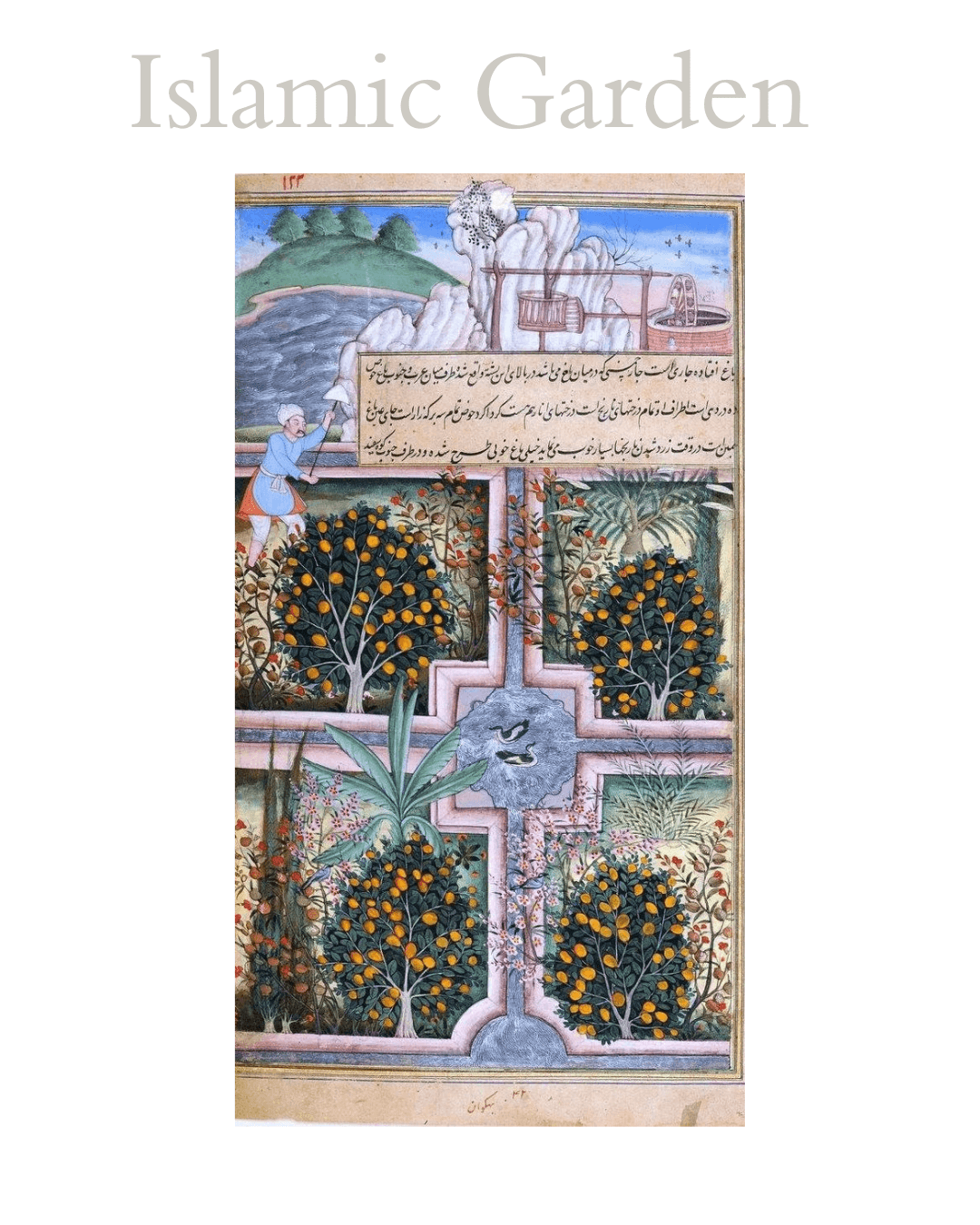
courtyards,
gardens,
water,
light,
symmetry,
craftsmanship.
They are right.
Yet they are also incomplete.
Because these are not merely architectural elements.
They are the vocabulary of an entire civilization.
To understand Islamic architecture, we therefore need to move beyond asking,
“What does it look like?”
and begin asking,
“What was it trying to teach?”
A Civilization That Built Meaning
One of the remarkable characteristics of Islamic civilization is that it rarely separated beauty from purpose.
A fountain refreshed the traveller.
It also calmed the soul.
A courtyard regulated temperature.
It also created silence before entering a place of prayer.
Calligraphy decorated walls.
It also surrounded everyday life with the words of Revelation.
Gardens offered shade.
They also echoed the Qur’anic descriptions of Jannah.
Geometry delighted the eye.
It also revealed the extraordinary harmony that can emerge from balance, order and proportion.
Nothing existed merely to fill empty space.
Everything carried meaning.
Beauty was never added at the end.
Beauty belonged to the foundation.
Why Geometry Became a Language
Among all the characteristics of Islamic architecture, none is more recognizable than its geometric patterns.
Circles.
Stars.
Polygons.
Interlacing lines.
Motifs that appear capable of extending endlessly beyond the walls that contain them.
For centuries, travellers admired their elegance.
Mathematicians admired their precision.
Artists admired their refinement.
Yet their deepest meaning is often overlooked.
Islamic geometry was never created simply to decorate a surface.
It was created to cultivate a way of seeing.
Mathematics Became Beauty
One of the greatest contributions of Islamic civilization was not only preserving the scientific knowledge of earlier civilizations, but expanding it.
From Baghdad to Córdoba, from Cairo to Samarkand, Muslim scholars transformed mathematics, astronomy, engineering and optics.
Among them was the Persian scholar Muḥammad ibn Mūsā al-Khwārizmī (c. 780–850 CE), whose name gave the world the word algorithm.
His work on Al-Jabr, from which the word algebra is derived, revolutionized mathematics.
These discoveries were never confined to books.
They shaped cities.
They influenced architecture.
They refined craftsmanship.
The compass.
The ruler.
The circle.
The precise division of space.
The extraordinary tessellations that continue to fascinate mathematicians today.
Knowledge became form.
Mathematics became beauty.
But perhaps the most remarkable lesson is this:
Muslim craftsmen never believed they were inventing order.
They believed they were discovering it.
Look carefully at creation.
The symmetry of a snowflake.
The structure of a honeycomb.
The branching of a tree.
The unfolding of a flower.
The movement of the stars.
The rhythm of the tides.
Order already exists.
Harmony already exists.
The role of the architect was not to compete with creation.
It was to observe it with humility.
Then translate that observation into stone, wood, plaster and ceramic.
Perhaps this is why Islamic geometry feels strangely familiar.
It does not impose a new order.
It echoes one we already recognize.
The Qur’an and the Language of Measure
This contemplation of order is deeply rooted in the Qur’an.
Allah ﷻ reminds humanity that creation was not brought into existence randomly.
It was created with wisdom.
With measure.
With balance.
Allah ﷻ says:
“Indeed, We have created everything according to a precise measure.”
Surah Al-Qamar (54), verse 49
And Allah ﷻ says:
“The Most Merciful raised the heaven and established the balance, so do not transgress the balance.”
Surah Ar-Raḥmān (55), verses 7–8
The Arabic word mīzān carries the meaning of balance, justice and equilibrium.
It extends far beyond architecture.
It shapes commerce.
Relationships.
Justice.
Nature.
And perhaps architecture itself.
When Muslim builders pursued proportion, they were not merely solving an aesthetic problem.
They were participating in a civilization that understood balance as one of the fundamental characteristics of Allah’s creation.
The Circle, the Square and the Star
Every language begins with a simple alphabet.
Islamic geometry begins with remarkably simple forms.
A circle.
A square.
A line.
From these elementary shapes emerges extraordinary complexity.
The circle has neither beginning nor end.
It evokes continuity.
Wholeness.
Unity.
The square introduces stability.
Foundation.
Orientation.
The earthly world.
Between the two appears one of the most fascinating forms in Islamic architecture:
The octagon.
It creates transition.
Movement.
Connection.
From there, stars unfold.
Eight points.
Ten points.
Twelve points.
Patterns expand in every direction.
The achievement lies not in complexity.
It lies in discovering how much beauty can emerge from a few perfectly mastered principles.
Extraordinary richness.
Remarkable restraint.
Perhaps this is one of the greatest lessons Islamic architecture offers our own age.
Beauty does not always come from adding more.
Sometimes it comes from understanding better.
Why Islamic Geometry Still Fascinates the World
Among all the characteristics of Islamic architecture, none is more instantly recognizable than its geometry.
Its stars.
Its circles.
Its polygons.
Its interlacing patterns that appear capable of continuing beyond the surface that contains them.
For centuries, travellers have admired their beauty.
Artists have studied their elegance.
Mathematicians have marvelled at their precision.
Today, researchers continue to examine the remarkable sophistication of these patterns, which still inspire contemporary architects, designers and mathematicians.
Yet one essential question is rarely asked:
Why did geometry become one of the defining languages of Islamic civilization?
The answer is not merely aesthetic.
It is civilizational.
When Mathematical Knowledge Entered Architecture
Across the great centres of the Muslim world, mathematical knowledge circulated, developed and found new applications.
From Baghdad to Córdoba.
From Cairo to Samarkand.
From Bukhara to Isfahan.
Mathematics informed astronomy, navigation, engineering, construction and the measurement of space.
It also entered the hands of architects and artisans.
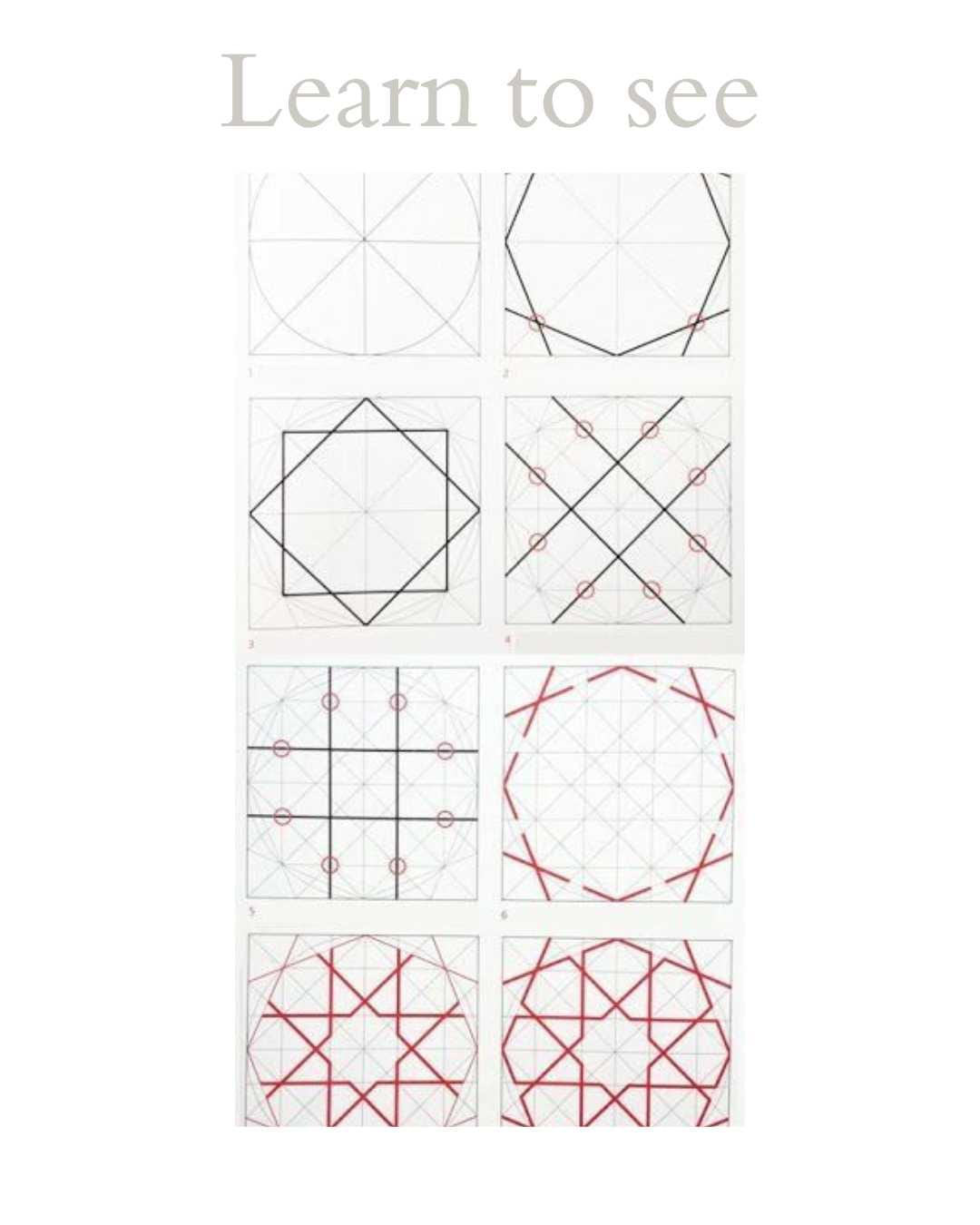
Through the compass and the ruler, surfaces were divided with extraordinary precision.
Circles generated polygons.
Lines established proportion.
Repeated units produced complex tessellations.
Knowledge moved beyond the manuscript and became visible in domes, courtyards, wooden screens, carved plaster and ceramic tiles.
Mathematics became craftsmanship.
And craftsmanship became beauty.
Muslim Architects Did Not Invent Order
Perhaps the most remarkable lesson is this;
Muslim craftsmen did not approach geometry as though order began with them.
They observed that creation was already filled with measure, rhythm and proportion.
The spiral of a shell.
The symmetry of a snowflake.
The structure of a honeycomb.
The branching of a tree.
The unfolding of a flower.
The rhythm of waves.
The movement of the planets.
The succession of day and night.
The architect’s task was therefore not to dominate creation.
Nor to claim to improve upon it.
It was to observe.
To contemplate.
To understand something of its balance.
Then to translate that contemplation into stone, cedar, marble, plaster and ceramic.
Perhaps this is why Islamic architecture so often feels harmonious rather than imposed.
It does not seek to compete with creation.
It learns from the order already placed within it by Allah ﷻ.
The Qur’an and the Language of Measure
This attention to order resonates deeply with the Qur’an.
Allah ﷻ repeatedly reminds humanity that creation was not brought into existence randomly.
Everything possesses measure.
Balance.
Wisdom.
Allah ﷻ says:
“Indeed, We have created everything according to a precise measure.”
Surah Al-Qamar (54), verse 49
And Allah ﷻ says:
“The Most Merciful raised the heaven and established the balance, so do not transgress the balance.”
Surah Ar-Raḥmān (55), verses 7–8
The Arabic word mīzān carries the meanings of balance, measure, justice and equilibrium.
Its significance extends far beyond architecture.
It concerns commerce.
Relationships.
Justice.
The natural world.
And it offers a powerful framework through which to contemplate proportion in the built environment.
When Muslim builders pursued harmony between forms, they were not merely resolving an aesthetic problem.
They belonged to a civilization in which balance was understood as one of the principles visible throughout the creation of Allah ﷻ.
Beauty was therefore not separated from order.
Nor order from meaning.
Learning the Alphabet of Islamic Geometry
Every language begins with an alphabet.
Islamic geometry begins with remarkably simple forms.
The circle.
The square.
The line.
From these elementary shapes emerges an extraordinary visual language.
The circle has no visible beginning or end.
It can evoke continuity.
Wholeness.
Unity.
The square introduces stability.
Orientation.
Measure.
Foundation.
Between them appears one of the most remarkable forms in Islamic architecture:
The octagon.
Neither entirely circular nor square, it creates a transition between two geometries.
From these foundations emerge stars.
Eight-pointed.
Ten-pointed.
Twelve-pointed.
Each composition unfolds according to precise mathematical relationships.
The result can appear infinitely rich.
Yet it originates from only a few carefully mastered principles.
There is an important lesson here.
True complexity can grow from profound simplicity.
Why Repetition Never Becomes Monotony
At first glance, Islamic patterns may appear repetitive.
Look again.
The eye never truly stops.
One form gives birth to another.
Then another.
Then another.
The composition appears capable of continuing beyond the wall itself.
The motif is finite.
Its movement suggests something beyond its visible limits.
This does not mean that the pattern represents Allah ﷻ.
Nothing in creation resembles Him, and no created form can contain His Essence.
Rather, the motif invites contemplation of the order, harmony and inexhaustible diversity found within creation.
The pattern becomes a path.
Not towards itself.
But towards reflection.
Why Islamic Art Does Not Depict Allah ﷻ
One of the most common misunderstandings about Islamic art is that geometry developed simply because Muslims avoided figurative imagery.
That explanation is incomplete.
The deeper question is:
If you do not seek to represent the Creator, how do you speak about Him?
Islamic civilization responded not by attempting to depict Allah ﷻ, whose Essence is beyond all imagination and likeness, but by contemplating His āyāt, His signs.
The heavens.
The earth.
The alternation of night and day.
Rain.
Mountains.
Gardens.
Stars.
Rivers.
Living creatures.
Allah ﷻ says:
“Indeed, in the creation of the heavens and the earth and the alternation of the night and the day are signs for people of understanding.”
Surah Āl ʿImrān (3), verse 190
Architecture became one of the ways Muslim civilization translated that contemplation into geometry, light, water, gardens and proportion.
It was not an attempt to portray the Creator.
It was an invitation to reflect upon His signs.
The Pattern Is Not the Destination
Perhaps this is the greatest misunderstanding.
People often stop at the pattern.
Islamic architecture invites us to move beyond it.
Beyond the ornament.
Beyond the technical achievement.
Beyond admiration alone.
Every carefully measured line quietly raises the same possibility,
Can beauty become a path to contemplation?
For the builders and artisans of Islamic civilization, knowledge, craftsmanship and faith did not belong to entirely separate worlds.
Mathematical understanding informed the motif.
The hand gave it form.
Intention gave the work its direction.
Together, they created a visual language that remains legible centuries later.
The pattern was never the destination.
It was the beginning of attention.
When Stone Learns to Speak
Geometry alone could never have built the Alhambra.
Nor the madrasas of Fez.
Nor the blue domes of Isfahan.
Nor the courtyards of Córdoba.
A geometric pattern is only an idea.
Someone must patiently bring it into existence.
Behind every carved panel.
Every mosaic.
Every dome.
Every fountain.
Every muqarnas.
There were hands.
Patient hands.
Disciplined hands.
Hands that transformed knowledge into matter.
For centuries, architecture was transmitted less through manuals than through human relationships.
A master taught an apprentice.
A father taught his son.
Knowledge passed from one generation to another.
Not only through words.
But through observation.
Repetition.
Correction.
And time.
This is why so much of Islamic architecture feels alive.
It carries the memory of those who built it.
When Work Begins with the Name of Allah ﷻ
Several years ago, I watched a documentary that profoundly changed the way I understand Islamic architecture.
It followed master craftsmen from Fez, Morocco, who had travelled to New York to recreate the Islamic Court at The Metropolitan Museum of Art.
They worked with remarkable precision.
Every measurement mattered.
Every cedar panel was carved slowly.
Every gesture reflected decades of experience.
Then something quietly caught my attention.
As they worked, they softly repeated:
“Lā ilāha illā Allāh.”
Not because anyone was watching.
Not because it was part of the documentary.
Simply because remembrance belonged to their work.
The hand carved.
The tongue remembered.
The heart remained connected.
At that moment I realised something.
These craftsmen were not simply preserving an architectural tradition.
They were preserving an ethical one.
Their excellence did not begin with technique.
It began with intention.
Perhaps this is one of the most beautiful expressions of Iḥsān.
Not perfection for recognition.
Excellence for Allah ﷻ.
The Vocabulary of Islamic Architecture
Once we begin to understand its language, every architectural element starts speaking differently.
Geometry teaches that harmony can emerge from simplicity.
Light changes throughout the day, reminding us that beauty is never static.
Water cools the body, reflects the sky and accompanies purification before prayer. It becomes both a practical necessity and a reminder of Allah’s mercy, for the Qur’an repeatedly describes water as the source of life.
Gardens recall the Qur’anic descriptions of Jannah, where rivers flow beneath gardens and peace replaces hardship.
Calligraphy transforms Revelation into architecture. Instead of representing Allah ﷻ through images, Islamic civilization surrounded people with His revealed words.
Muqarnas, those remarkable honeycomb-like vaults, dissolve the weight of stone into light. They create the impression that the building itself is unfolding upward, drawing the eye toward the heavens.
Each element has a practical function.
Each also carries meaning.
Beauty and purpose were never separated.
A Civilization Written Across Continents
This language travelled remarkably far.
The Alhambra in Granada speaks through water, geometry and proportion.
The workshops of Fez preserve one of the world’s greatest traditions of craftsmanship.
The mosques of Isfahan transform colour and light into contemplation.
The madrasas of Samarkand remind us that knowledge itself deserved magnificent spaces.
The ceramics of İznik reveal how even a single tile can become an expression of excellence.
Different cultures.
Different dynasties.
Different materials.
Yet a remarkably consistent vision.
Not uniformity.
Unity.
More Than a Style
Perhaps this is the greatest lesson Islamic architecture leaves us.
It is not a historical style waiting to be copied.
Nor a catalogue of domes, arches or decorative motifs.
It is evidence that a civilization can unite faith, knowledge, mathematics, craftsmanship and beauty into a coherent whole.
The buildings are extraordinary.
But they are not the true masterpiece.
The true masterpiece is the civilization that made them possible.
Perhaps this is why Islamic architecture still moves us today.
Not because it belongs to another age.
But because it quietly reminds us that beauty is never accidental.
It grows where knowledge meets humility.
Where craftsmanship meets patience.
Where mathematics meets contemplation.
Where excellence begins long before the first stone is placed.
The future of Islamic architecture will not be secured by reproducing the monuments of the past.
It will be secured by recovering the principles that gave birth to them.
To build with intention.
To create with integrity.
To pursue Iḥsān even when no one is watching.
Because every civilization leaves monuments.
Few leave a language.
And perhaps the greatest achievement of Islamic architecture is that, centuries later, it still whispers the same invitation:
Learn to see.