Some fruits nourish the body. Others quietly teach us how to look at the world.
There are fruits you eat.
And there are fruits you contemplate.
The mangosteen belongs to the second category.
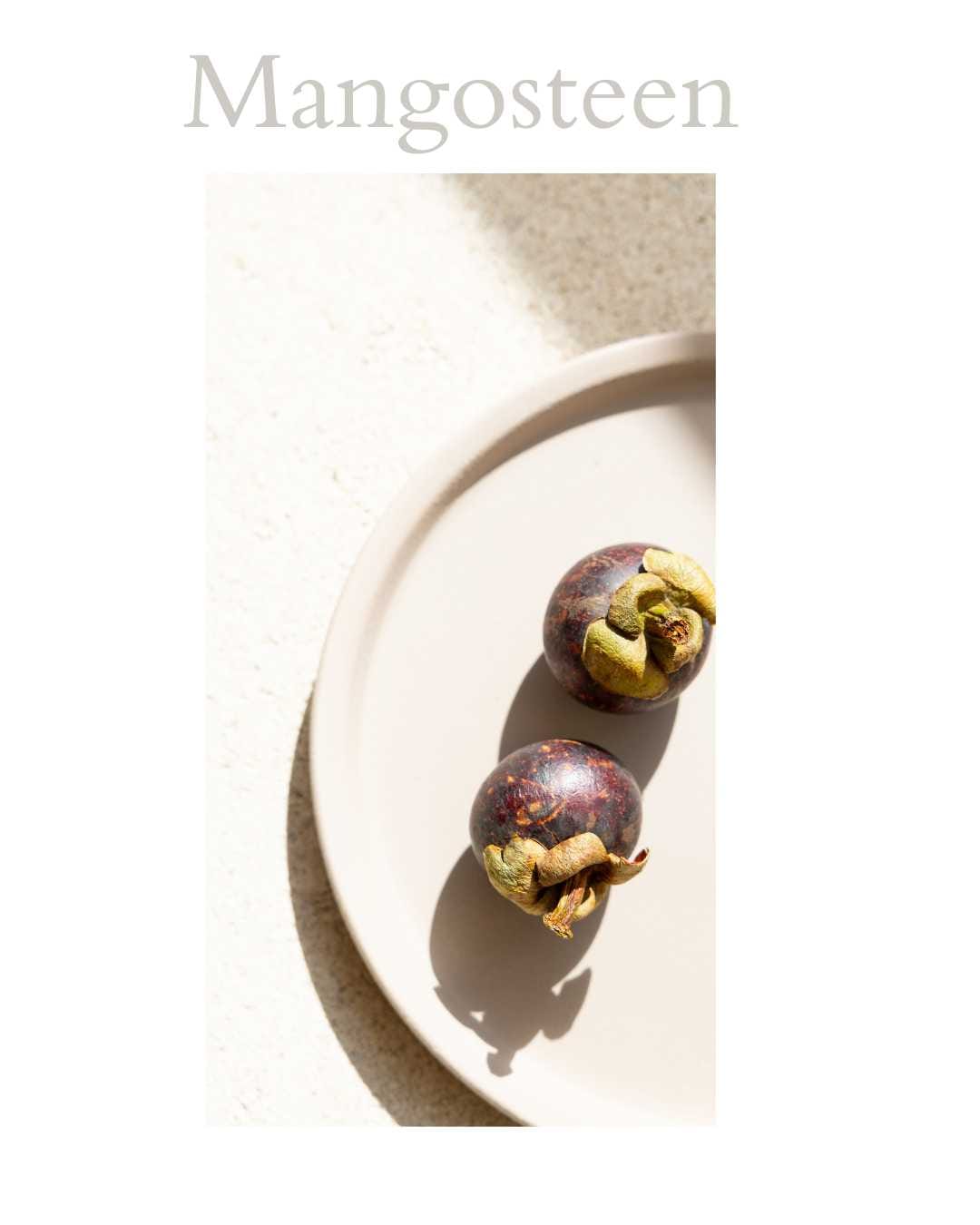
From the outside, it looks almost carved.
A deep purple shell with the texture of polished wood.
At its base, a perfect rosette appears, as though a flower had been sculpted directly into the fruit itself.
A seal.
A signature.
A reminder.
Then you open it.
Subḥān Allāh.
The inside unfolds like another creation entirely.
White segments arranged with astonishing precision.
Soft.
Luminous.
Perfectly balanced.
A gentleness protected by strength.
A harmony that seems almost architectural.
This is not random.
This is intentional beauty.
For many people, the mangosteen is simply an exotic fruit from Southeast Asia.
For others, it is celebrated for its exceptional nutritional profile and its richness in antioxidants.
But perhaps its greatest gift lies elsewhere.
It invites us to pause.
To observe.
To recognise that beauty is not an accident of nature, but one of its languages.
At Islamic Art of Living, we believe that learning begins long before books.
It begins with attention.
And sometimes, one fruit is enough to remind us how much there still is to see.
What Is Mangosteen?
Before asking what the mangosteen can teach us, it is worth understanding why this remarkable fruit has fascinated botanists, physicians and travellers for centuries.
Known scientifically as Garcinia mangostana, the mangosteen is an evergreen tropical fruit native to the Malay Peninsula and widely cultivated throughout Malaysia, Indonesia, Thailand and other parts of Southeast Asia.
For generations, it has been affectionately known as the Queen of Fruits, admired not only for its delicate flavour but also for its extraordinary appearance.
Its thick purple rind protects a cluster of brilliant white segments, each wrapped with remarkable care.
Even before tasting it, one senses that every detail has been thoughtfully composed.
Its flavour is equally memorable.
Often described as a delicate balance between peach, lychee, citrus and strawberry, the mangosteen combines sweetness with a subtle acidity that makes it unlike almost any other fruit.
It is one of those rare foods that surprises both the palate and the eye.
Today, the mangosteen is also attracting growing scientific interest.
Researchers continue to study its naturally occurring compounds, particularly xanthones, a family of powerful antioxidants as well as its vitamin C, fibre and polyphenol content.
While research is still evolving, the fruit has become increasingly appreciated for its nutritional richness and its place within a balanced diet.
Yet none of these facts fully explains why the mangosteen leaves such a lasting impression.
Its true fascination begins before its nutritional value.
It begins with its design.
Because long before we ask whether a fruit is good for us, perhaps we should first ask another question:
What can this fruit teach us about the One who created it?
The Fruit That Looks Designed
There are fruits that nourish.
And there are fruits that make us stop.
The mangosteen belongs to both.
Look at it before opening it.
Its deep purple shell is crowned by a perfectly formed rosette. At its base, each lobe quietly reveals the number of white segments hidden inside.
What appears to be a simple decorative detail is, in fact, part of the fruit’s remarkable design.
Nothing has been added.
Nothing has been carved.
Its beauty belongs entirely to its creation.
Open it, and another surprise appears.
The thick protective rind gives way to delicate white segments, arranged with striking symmetry around the centre.
Strength protects softness.
Simplicity conceals extraordinary complexity.
The more we observe, the more we discover that beauty is rarely superficial.
It is measured.
Balanced.
Purposeful.
Perhaps this is why the mangosteen fascinates so many people.
Not only because it is delicious.
But because something within us instinctively recognises harmony when we encounter it.
Long before scientists studied its nutritional composition, its form was already inviting us to pause.
And perhaps that is where nourishment truly begins.
Every Fruit Is a Sign
The Qur’an repeatedly invites humanity to observe creation.
Not merely to look.
But to reflect.
Again and again, Allah ﷻ directs our attention towards the heavens and the earth, the alternation of night and day, the mountains, the rain, the plants, the fruits and every living creature.
These are not presented as ordinary phenomena.
They are presented as āyāt.
Signs.
Allah ﷻ says:
“Indeed, in the creation of the heavens and the earth and the alternation of the night and the day are signs for people of understanding.”
Surah Āl ʿImrān (3), verse 190
The Arabic word āyah carries a profound meaning.
It is the very same word used to describe the verses of the Qur’an.
One revelation is recited.
The other is contemplated.
The believer therefore learns to read two books.
The Book of Revelation.
And the book of Creation.
The mangosteen is one page among countless others.
Its architecture.
Its proportion.
Its protection.
Its colour.
Its flavour.
Its remarkable nutritional richness.
None of these exist without wisdom.
Every Fruit Is a Favour
Scientists continue to study the mangosteen for its naturally occurring antioxidants, particularly its xanthones, as well as its vitamin C, fibre and polyphenols.
These discoveries deepen our understanding of the fruit.
They do not diminish its wonder.
Knowledge and contemplation are not opposites.
They enrich one another.
The more we understand creation, the more reasons we have to admire the One who created it.
Perhaps this is why Surah Ar-Raḥmān returns again and again to the same question:
“Then which of the favors of your Lord will you deny?”
Surah Ar-Raḥmān (55), verse 13
The verse is repeated thirty-one times throughout the surah.
Not because Allah ﷻ needs reminding.
Because we do.
We become accustomed to blessings until we no longer notice them.
A fruit.
A tree.
Rain.
Health.
Colour.
Taste.
Life itself.
The mangosteen reminds us that nourishment is never only about what enters the body.
It is also about what awakens the heart.
Perhaps this is the true gift hidden inside this extraordinary fruit.
Not simply its sweetness.
But its quiet invitation to rediscover gratitude.
Because every favour begins with recognising that it is, indeed, a favour.
More Than Nutrition
Perhaps this is where modern life has made us poorer.
We have learned to analyse food.
To measure it.
To classify it.
To count its vitamins.
Its antioxidants.
Its calories.
Its sugars.
Its fibre.
All of this knowledge is valuable.
But it is incomplete.
Because nourishment is not only a biological act.
It is also a spiritual one.
The Qur’an never invites us merely to consume.
It invites us to contemplate.
To remember.
To give thanks.
Every meal therefore becomes more than a moment of nourishment.
It becomes an opportunity to recognise the generosity of Allah ﷻ.
A fruit is no longer simply a source of nutrients.
It becomes a reminder.
A sign.
A favour.
Perhaps one of the greatest losses of our time is not that we eat differently from our ancestors, but that we no longer look at our food with the same wonder.
Nourishing the Body. Nourishing the Heart.
The mangosteen reminds us that the greatest blessings often arrive quietly.
Protected beneath an ordinary shell.
Waiting to be discovered.
Just like so many blessings in our own lives.
Health.
Time.
Family.
Knowledge.
Provision.
Peace.
They become extraordinary the moment we truly begin to notice them.
Perhaps this is why Allah ﷻ repeatedly asks us throughout Surah Ar-Raḥmān:
“Then which of the favors of your Lord will you deny?”
Surah Ar-Raḥmān (55), verse 13
The question is not addressed to our memory.
It is addressed to our awareness.
Can we still recognise beauty before consuming it?
Can we still admire creation before analysing it?
Can we still thank Allah ﷻ before moving to the next thing?
Perhaps gratitude begins there.
The mangosteen is often celebrated as the Queen of Fruits.
Not because it is the rarest.
Nor because it is the most expensive.
But because it reminds us that true richness is rarely loud.
It is found in balance.
In precision.
In generosity.
In beauty.
In the quiet perfection that Allah ﷻ has placed throughout His creation.
Every fruit carries nourishment.
Some also carry a lesson.
The mangosteen is one of them.
Perhaps the next time you hold one in your hands, you will not only taste its sweetness.
You will pause.
You will observe.
And you will remember that the greatest nourishment begins long before the first bite.
It begins with gratitude.
Continue Exploring
What if the most visionary wellness system already exist ?
The Sacred Code Behind Every Drop of Honey