Ashura, Musa, and the Miracle That Began Before the Sea Opened
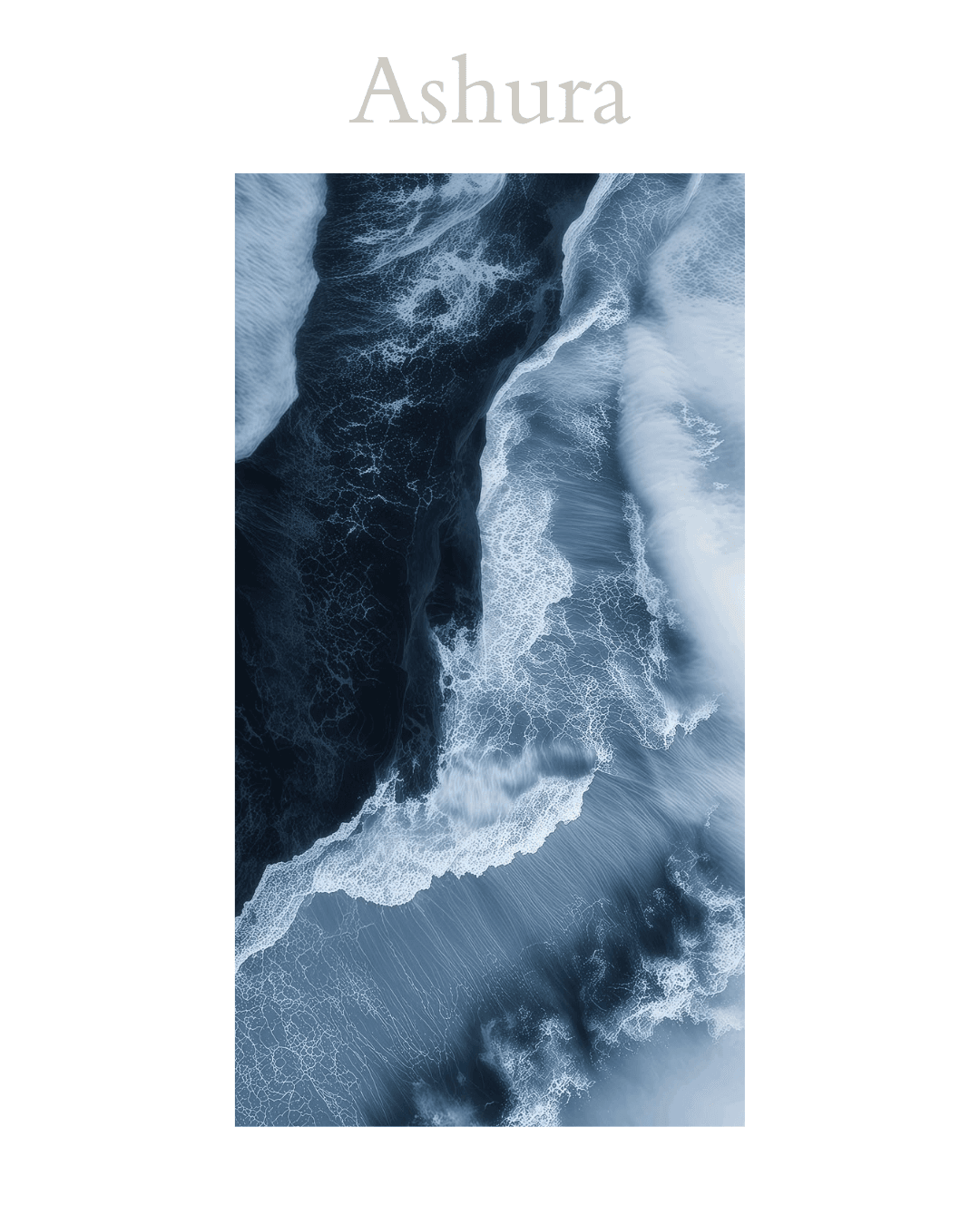
“Then We inspired Musa, ‘Strike the sea with your staff,’ and it parted, each part becoming like a great towering mountain.”
Surah Ash-Shu’ara (26), verse 63
What do you do when every door is closed?
When every calculation tells you there is no way forward.
When everything you can see points toward failure.
Ashura begins exactly there.
Not with a miracle.
But with a moment when every human certainty reached its limit.
Behind Prophet Musa (peace be upon him) stood Pharaoh and his army.
Before him stretched the sea.
His companions saw only water.
Prophet Musa (peace be upon him) saw something else.
He saw the promise of Allah ﷻ.
Then Allah ﷻ revealed:
“Strike the sea with your staff.”
And history changed forever.
The sea obeyed immediately.
Creation never hesitates to obey its Creator. Only human beings struggle to trust Him.
That is why Ashura continues to inspire Muslims thousands of years after this miracle.
Because the greatest miracle was not that the sea opened.
It was that faith came before it did.
What Is Ashura?
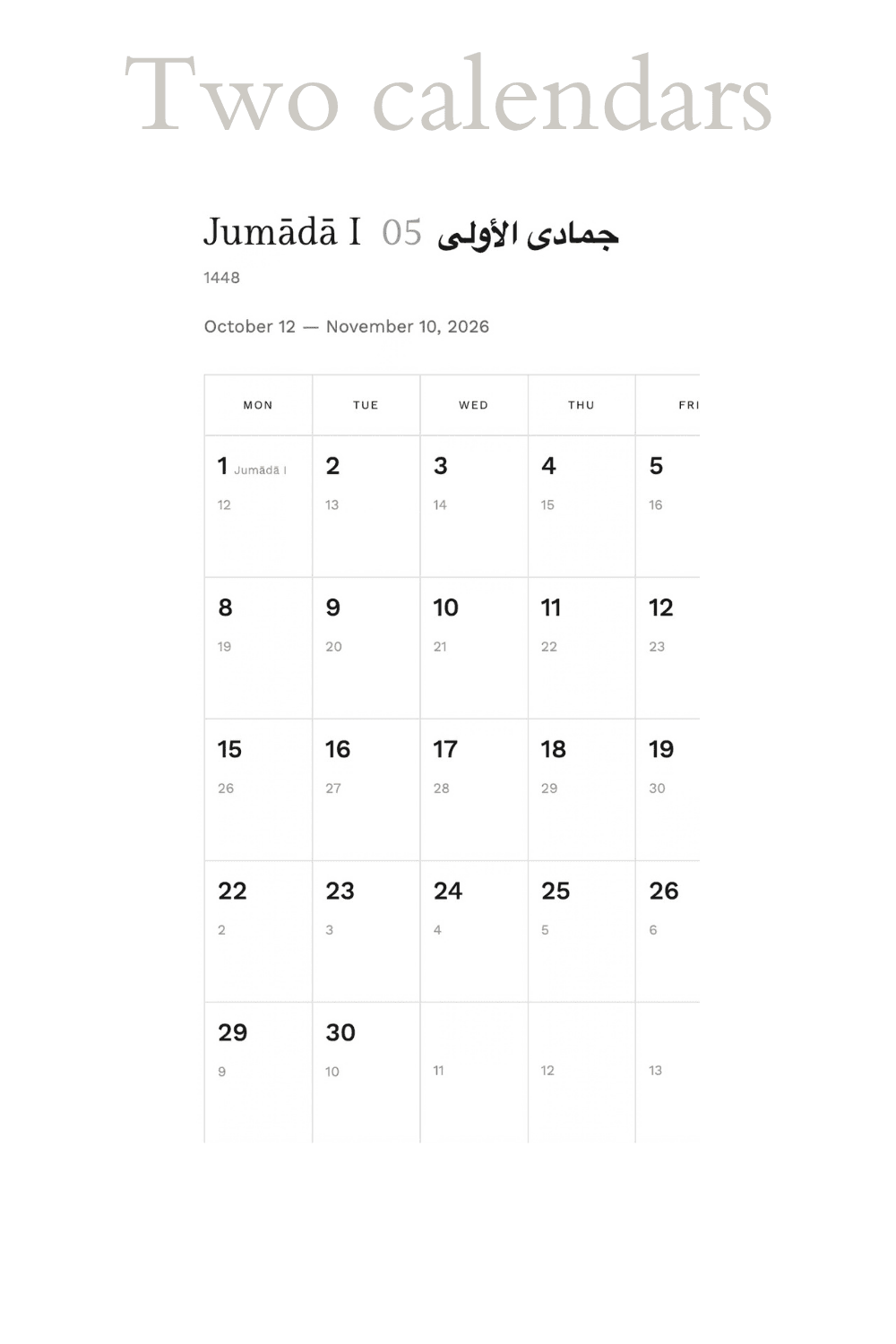
Ashura is observed on the 10th day of Muharram, the first month of the Islamic lunar calendar and one of the four Sacred Months mentioned in the Qur’an.
For Muslims around the world, Ashura commemorates the day Allah ﷻ saved Prophet Musa (peace be upon him) and the Children of Israel from Pharaoh.
It is also one of the most beloved days of voluntary fasting in Islam.
The Prophet Muhammad (peace and blessings be upon him) fasted on this day and encouraged his companions to do the same as an act of gratitude to Allah ﷻ.
Some Muslims choose to fast:
- the 10th of Muharram (Ashura);
others fast:
- the 9th and the 10th;
and many also fast:
- the 9th, the 10th, and the 11th of Muharram, following the Prophetic tradition.
The Prophet Muhammad (peace and blessings be upon him) also taught that the voluntary fasting of Muharram is among the most virtuous after Ramadan, and that fasting Ashura is a means by which Allah ﷻ forgives the sins of the previous year, by His mercy.
One Revelation. Many Prophets.
One of the most remarkable aspects of Islam is the way it understands prophetic history.
Many people assume Islam begins with the Prophet Muhammad ﷺ.
It does not.
Islam recognizes:
- Prophet Adam (peace be upon him)
- Prophet Nuh (Noah, peace be upon him)
- Prophet Ibrahim (Abraham, peace be upon him)
- Prophet Musa (Moses, peace be upon him)
- Prophet Isa (Jesus, peace be upon him)
The Qur’an presents revelation as one continuous message, entrusted to many prophets throughout history.
Ashura is one of the clearest expressions of this continuity.
When the Prophet Muhammad ﷺ arrived in Madinah after the Hijrah, he found that the Jewish community was fasting on this day.
When he asked why, they replied that it was the day Allah ﷻ had saved Prophet Musa (peace be upon him) from Pharaoh.
The Prophet Muhammad ﷺ:
“We have more right to Musa than they do.”
Narrated in Sahih al-Bukhari and Sahih Muslim.
Then he fasted Ashura and encouraged his companions to fast.
This statement is extraordinary.
It teaches that Prophet Musa (peace be upon him) is not only the prophet of one community.
He is one of our prophets.
Islam does not erase those who came before.
It recognizes them.
It honors them.
It confirms the message they carried.
In a world that constantly separates people into different identities, Islam reminds us that Revelation is one story, and the prophets are one family.
The Miracle Began Before the Sea Opened
Most people remember the sea opening.
But the greatest miracle began before that.
Before the water moved.
Before the path appeared.
Before safety arrived.
Prophet Musa (peace be upon him) declared:
“No! Indeed, my Lord is with me; He will guide me.”
Surah Ash-Shu’ara (26), verse 62
Faith came before the miracle.
Trust came before the solution.
Obedience came before the opening.
The sea did not strengthen Prophet Musa’s (peace be upon him) faith.
His faith preceded the sea.
Perhaps this is the lesson Ashura continues to teach every generation.
Every believer eventually stands before a sea.
A situation where reason reaches its limit.
Where every visible door appears closed.
Where every calculation says:
“There is no way.”
Yet Ashura teaches us something even deeper.
Faith is not the ability to deny what we see.
Faith is the ability to trust Allah ﷻ beyond what we can see.
Standing before the sea, Prophet Musa (peace be upon him) saw exactly what everyone else saw.
The difference was not what he saw.
The difference was Who he trusted.
We see the obstacle.
Allah ﷻ sees the opening.
We see the sea.
Allah ﷻ sees the path.
We see the ending.
Allah ﷻ already knows the beginning beyond it.
Perhaps that is the deepest lesson of Ashura.
Trust Allah ﷻ not only for what you understand.
Trust Him especially for what you cannot yet see.
From Musa to Muhammad : The Journey Continues
Ashura comes only days after Muslims enter Muharram, the month that opens the Islamic year.
As we explored in “The Islamic New Year Is Not What You Think,” the Islamic calendar itself begins with another profound act of trust:
The Hijrah.
Just as Prophet Musa (peace be upon him) left Egypt trusting Allah ﷻ…
The Prophet Muhammadﷺ left Makkah trusting Allah ﷻ.
Different journeys.
The same trust.
Different generations.
The same Lord.
The Prophet Muhammad ﷺ left Makkah, the city of the Ka’bah, his birthplace, and the place he loved most not because he wished to leave, but because remaining there no longer allowed him to worship Allah ﷻ freely.
Sometimes remaining faithful means leaving behind what we love.
Even when what we leave behind is sacred.
The Hijrah reminds us that true success is not remaining where we are comfortable.
It is moving wherever obedience to Allah ﷻ calls us.
A Gentle Reminder for Our Sisters
If today you are experiencing your monthly cycle, know that you are not distant from worship.
In Islam, refraining from fasting during menstruation is itself an act of obedience to Allah ﷻ.
Submission sometimes means acting.
Sometimes it means accepting the pause that Allah ﷻ has prescribed.
You can still fill your day with:
- dhikr (remembrance of Allah ﷻ)
- du’a (supplication)
- gratitude
- charity
- reflection
Every sincere act performed for Allah ﷻ is an act of worship.
Al hamdulillah.
Ashura is not only the story of Prophet Musa (peace be upon him).
It is the story of every believer who has ever stood before an impossible situation.
It is the story of trusting before seeing.
Walking before knowing.
Believing before understanding.
Perhaps this is why the Prophet Muhammad ﷺ honored this day with fasting.
Not only to remember a miracle.
But to remember the Lord of the miracle.
More than three thousand years after the sea opened, its message still reaches us.
When Allah ﷻ commands, even the sea makes a way.
And perhaps the question Ashura leaves each of us with is beautifully simple:
What sea am I asking Allah ﷻ to open today?
Continue Your Journey
→ The Islamic New Year Is Not What You Think
→ Hajj Is Arafah: The Most Important Day of the Islamic Year
→ Why the First Ten Days of Dhul-Hijjah Are So Sacred
Frequently Asked Questions
What is Ashoura?
What is Ashoura?
Ashura is the 10th day of Muharram, the first month of the Islamic lunar calendar. It commemorates the day Allah ﷻ saved Prophet Musa (peace be upon him) and the Children of Israel from Pharaoh.
Why do Muslims fast on Ashura?
Why do Muslims fast on Ashura?
Muslims fast Ashura following the Sunnah of the Prophet Muhammad (peace and blessings be upon him), who fasted in gratitude to Allah ﷻ for saving Prophet Musa (peace be upon him). Fasting Ashura is a voluntary act of worship with great spiritual merit.
Why did the Prophet Muhammad ﷺ say , “We have more right to Musa”?
Why did the Prophet Muhammad ﷺ say , “We have more right to Musa”?
Because Islam recognizes Prophet Musa (peace be upon him) as one of its own prophets. Muslims believe that all prophets were sent by Allah ﷻ with the same essential message: to worship Him alone. Ashura beautifully illustrates the continuity of revelation.
Is Ashura connected to Muharram?
Is Ashura connected to Muharram?
Yes. Ashura falls on the 10th of Muharram, the first month of the Islamic calendar and one of the four Sacred Months mentioned in the Qur’an.
Can women worship during menstruation on Ashura?
Can women worship during menstruation on Ashura?
Yes. Although they do not fast or perform the ritual prayer, they remain in worship through dhikr, du’a, charity, gratitude, reflection, and remembrance of Allah ﷻ.
Is Ashura one of the two Eids?
Is Ashura one of the two Eids?
No. The two major celebrations in Islam are Eid al-Fitr and Eid al-Adha. Ashura is a day of remembrance, gratitude, reflection, and voluntary fasting.
Surah At-Talaq (65), verse 3
“And whoever puts their trust in Allah—He is sufficient for them.”