What Al-Sufi Teaches Us About Truth, Excellence, and the Intellectual Legacy of Islamic Civilization
Many people describe Islamic civilization as a bridge.
A civilization that preserved Greek, Persian, Indian, and earlier knowledge before transmitting it to the rest of the world.
The statement is true.
But it is incomplete.
Islamic civilization did not merely preserve knowledge.
It examined it.
It tested it.
It challenged it.
And when necessary, it corrected it.
One of the most remarkable examples comes from the night sky.
The work of the 10th-century astronomer ʿAbd al-Rahman al-Sufi.
Knowledge Was Never Meant To Be Repeated
In many civilizations, inherited knowledge becomes authority.
Authority becomes tradition.
Tradition becomes untouchable.
But Islamic civilization developed a different relationship with knowledge.
Knowledge was an Amanah.
A trust.
And a trust carries responsibility.
If something could be measured more accurately, it had to be measured.
If something could be verified, it had to be verified.
If reality contradicted assumptions, reality came first.
This intellectual discipline shaped medicine, mathematics, geography, optics, architecture, and astronomy.
Al-Sufi And The Sky
In the 10th century, Al-Sufi produced:
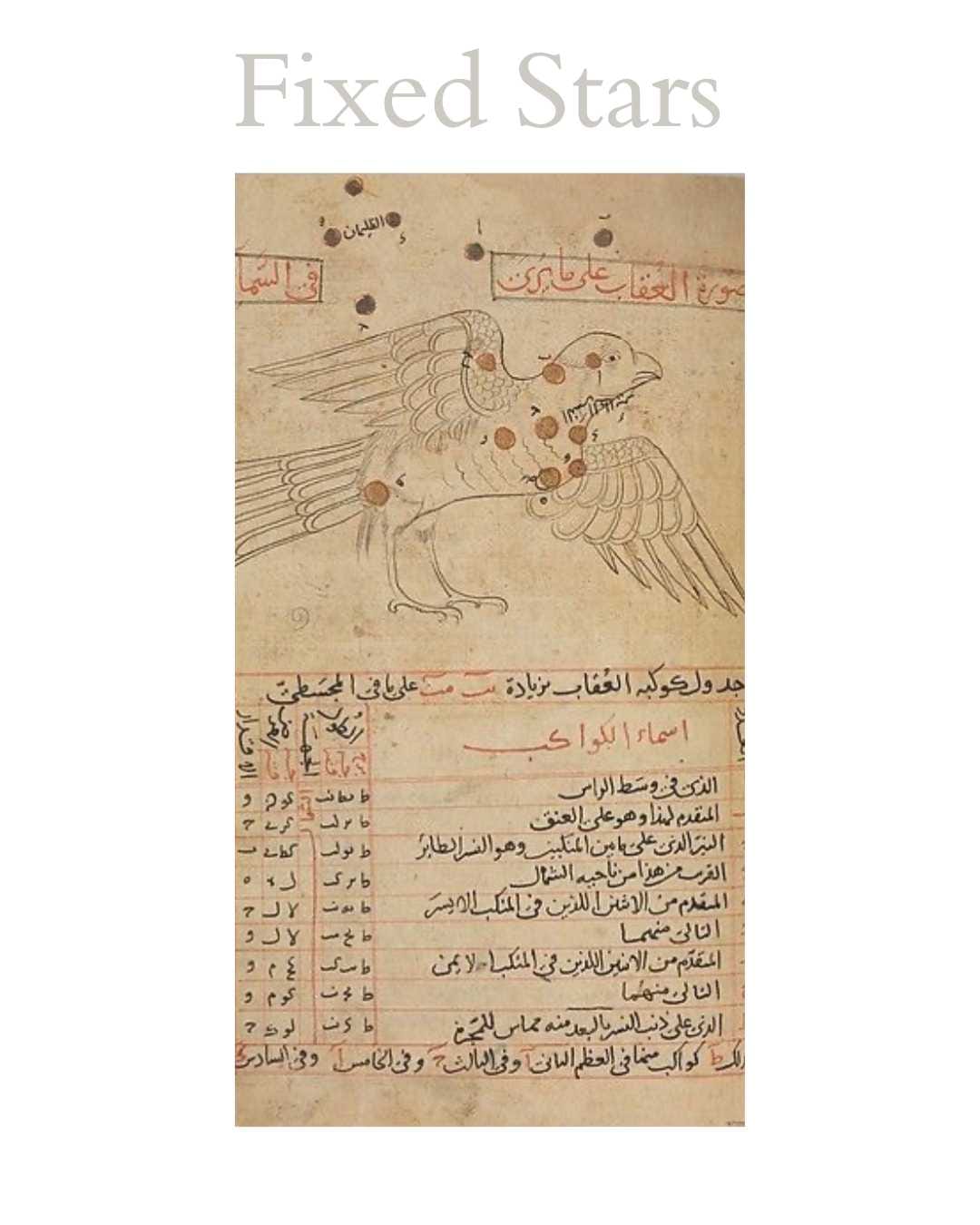
Kitab Suwar al-Kawakib al-Thabitah
(The Book of the Fixed Stars)
The work is often described as a star catalogue.
That description does not do justice to its importance.
Al-Sufi inherited the astronomical system of Ptolemy.
But he refused to treat it as unquestionable authority.
Instead, he looked at the sky.
Again.
And again.
And again.
He corrected stellar positions.
He recalculated magnitudes.
He refined descriptions.
He compared inherited knowledge with observable reality.
What emerged was not a copy.
It was an improvement.
He Drew What People Actually Saw
One of the most remarkable innovations of Kitab Suwar al-Kawakib al-Thabitah was not mathematical.
It was visual.
For each constellation, Al-Sufi produced two illustrations:
- one as seen in the sky
- one as seen on a celestial globe
This may sound simple today.
It was not.
He was helping readers move between observation and representation.
Between reality and knowledge.
Between the night sky and the written page.
In many ways, he was creating one of the earliest scientific visualization systems in history.
Knowledge became something that could be seen.
Not merely inherited.
He Preserved Arabic Names For The Stars
Many people do not realize that the night sky still carries the vocabulary of Islamic civilization.
Stars such as:
- Altair
- Aldebaran
- Betelgeuse
- Deneb
- Rigel
all derive from Arabic names.
Al-Sufi did not simply record stars.
He participated in preserving a scientific language that still survives more than a thousand years later.
Every time a modern astronomer uses one of these names, a fragment of that intellectual heritage remains alive.
The Little Cloud
Among hundreds of observations, one note appears almost insignificant.
Al-Sufi described a faint cloudy patch in the constellation of Andromeda.
He called it:
al-Latkha al-Saghira
(The Little Cloud)
Today we know this object as:
The Andromeda Galaxy.
The nearest major galaxy to our own.
Containing hundreds of billions of stars.
What makes this remarkable is not that Al-Sufi understood modern cosmology.
He did not.
What matters is that he recorded reality faithfully.
He saw something.
He admitted that it was there.
Even though he could not fully explain it.
That is intellectual honesty.
And perhaps that is the deeper lesson.
Truth does not become true when we understand it.
Truth exists before our understanding.
Our responsibility is to observe it honestly.
Why This Mattered
This was not astronomy for curiosity alone.
The sky played a practical role in Muslim societies.
Astronomical precision helped:
- determine prayer times
- establish lunar months
- orient mosques
- calculate the qibla
- navigate deserts
- navigate oceans
- develop astrolabes
- organize daily life
The sky was studied so life on Earth could be lived correctly.
Knowledge served worship.
Knowledge served society.
Knowledge served reality.
Ihsan In Knowledge
Today the word ihsan is often translated as excellence.
But excellence is not merely producing something beautiful.
It is producing something truthful.
Al-Sufi’s work reminds us that Islamic civilization valued:
- rigor
- verification
- observation
- humility before reality
Sometimes this meant correcting previous authorities.
Not because they were disrespected.
But because truth mattered more than reputation.
This was not rebellion.
It was intellectual integrity.
A Forgotten Lesson For Our Time
Modern discussions about Islamic civilization often focus on what Muslims inherited.
Less attention is given to what they improved.
Yet this distinction changes everything.
Civilizations do not become great by storing knowledge.
They become great by engaging with it.
Testing it.
Refining it.
Building upon it.
That is precisely what scholars such as Al-Sufi did.
And perhaps this is the deeper lesson his work leaves us.
The pursuit of truth is not foreign to Islam.
It is one of its oldest traditions.
The Manuscripts Still Exist
More than a thousand years later, illustrated copies of Kitab Suwar al-Kawakib al-Thabitah remain preserved in major institutions around the world.
Including collections held by:
- The British Library
- The Bibliothèque nationale de France
- The Metropolitan Museum of Art
A reminder that the intellectual legacy of Islamic civilization is not mythology.
It is documented.
Preserved.
Studied.
And still capable of inspiring the future.
The stars taught Al-Sufi something that remains relevant today.
Truth does not fear examination.
A confident civilization does not merely inherit knowledge.
It refines it.
And perhaps that is one of the most powerful lessons Islamic civilization still has to offer the world.
Because knowledge is an Amanah.
And every generation is responsible for carrying it with honesty, rigor, and humility.