What rises above the surface is not what holds the world together. It is what lies beneath.
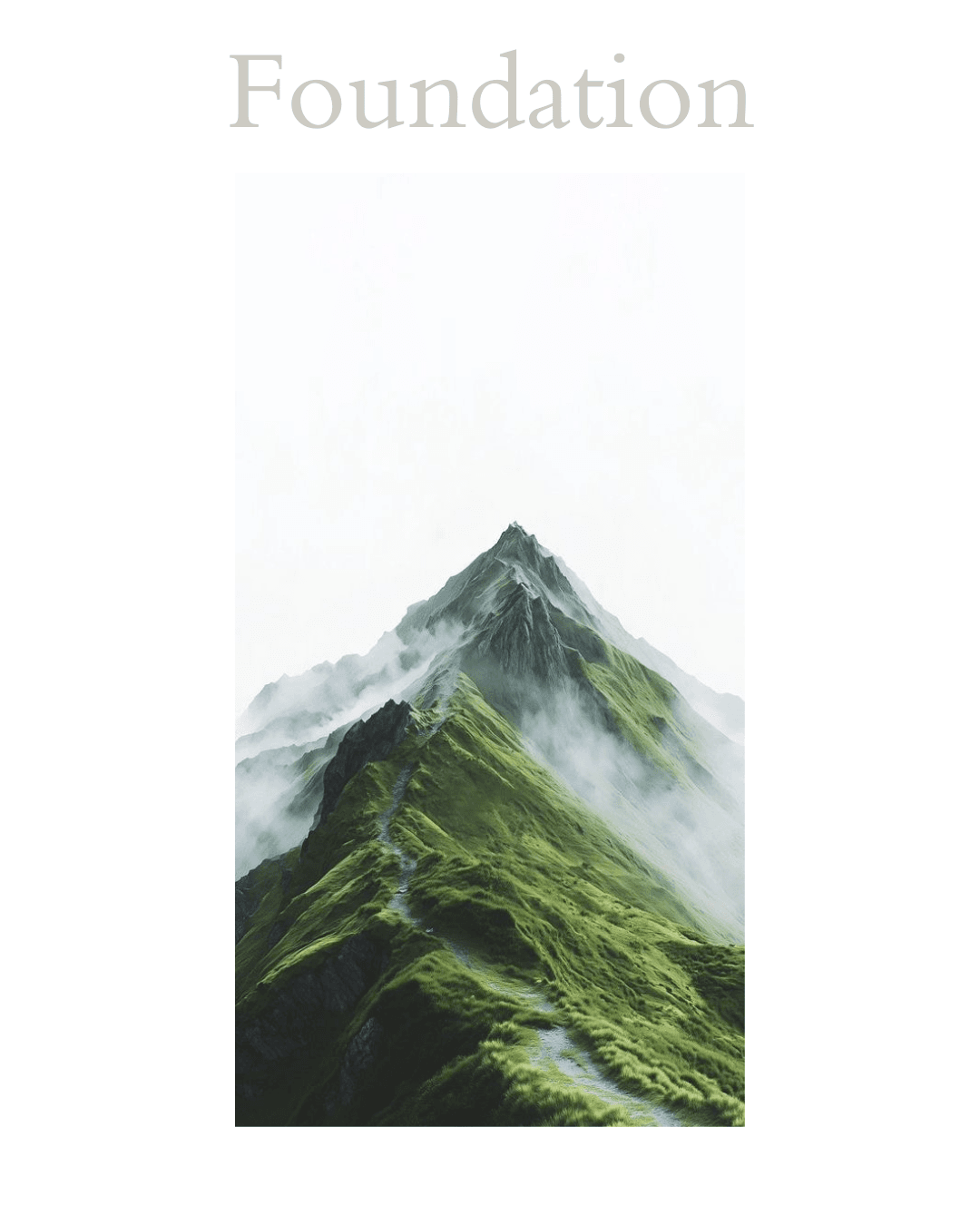
You see mountains rise.
The Qur’an describes them differently.
Not as monuments.
Not as symbols of height or grandeur.
But as anchors.
Silent structures, placed within the earth
not to be admired,
but to stabilize.
What appears immovable above the surface
is only a fraction of what exists beneath it.
And in that unseen depth,
a lesson begins.
They rise, but they do not rely on height.
They stand, but they are held from below.
What anchors them is hidden
what defines them is unseen.
And in their silence,
they carry a weight few could bear.
Mountains in the Qur’an: A Definition Beyond Appearance
In the Qur’an, mountains are described as pegs (“awtād”) that stabilize the earth, a concept that aligns with modern geological understanding of deep mountain roots.
“Have We not made the earth as a bed, and the mountains as pegs?”
(Qur’an Surah An-Naba, 78 verses 6–7)
A peg is not defined by what is visible.
It is defined by what it holds.
It penetrates.
It anchors.
It stabilizes what would otherwise shift.
This is not only imagery.
It is structure.
The Depth Beneath: What Science Later Revealed
For centuries, this description remained a matter of reflection.
Today, geology offers another layer of understanding,
- Mountains possess deep roots beneath the surface
- These roots extend several times deeper than their visible height
- They contribute to the stabilization of tectonic structures
- Without them, seismic activity would be far more intense
What appears as elevation
is in reality a system of balance.
The visible peak is not the strength.
The hidden foundation is.
Amanah: When Even Mountains Refrained
And yet, the Qur’an extends the reflection beyond the physical.
It introduces another dimension, weight.
“Indeed, We offered the Trust (Amanah) to the heavens and the earth and the mountains, but they refused to bear it and were afraid of it; yet man undertook it.”
(Qur’an Surah Al-Ahzab, 33 verse 72)
The mountains
with all their mass,
their stability,
their rooted presence
refused.
Not out of weakness.
But out of awareness.
They recognized the weight of responsibility.
Amanah is not a concept of power.
It is a measure of accountability.
Even what stabilizes the earth
trembled before it.
From Structure to Flow: The Same Intelligence in Creation
Mountains anchor.
But creation is not built on anchoring alone.
It is also built on flow.
In another form, another scale, another function
the same intelligence appears again.
In copper.
As explored in Copper: The Silent Conductor Between Matter, Life, and Revelation,
this element does not stabilize—it connects.
It conducts energy.
It carries information.
It allows systems to function.
Where mountains hold the earth in place,
copper allows the world to move.
Two different roles.
One coherent design.
One anchors.
One conducts.
Both serve.
Both obey.
Both reflect the same Source: Allah ﷻ.
What Mountains Teach Us About Stability
Mountains do not teach us to rise.
They teach us to root.
They remind us
- Stability is not defined by visibility
- Strength is not measured by height
- What holds you is often what no one sees
True anchoring happens in silence.
In the unseen.
In what is built beneath the surface.
From Earth to Self: A Blueprint for Leadership and Faith
In leadership.
In business.
In faith.
The same principle applies.
- Stability is not about being seen
- It is about what you anchor internally
- What makes you unshakable is not elevation but depth
And just as copper flows silently to connect systems,
your role is not only to stand firm
but to allow what passes through you to remain aligned.
To hold when needed.
To flow when required.
Beyond Metaphor: A Continuous Blueprint
This is not coincidence.
It is coherence.
The same revelation that speaks of mountains as stabilizers
also speaks of elements that conduct, connect, and sustain.
Different forms.
Same intelligence.
The Qur’an does not separate the physical from the spiritual.
It unifies them.
Closing Reflection
The next time you see a mountain,
do not only look at its height.
Consider its depth.
Consider what holds it.
What anchors it.
What allows it to stand without collapse.
And then
remember:
Not everything is meant to rise.
Some things are meant to hold.
Others are meant to carry.
And in that balance,
the world is sustained.
Anchor yourself.
Flow where needed.
Return to the Source—Allah ﷻ.