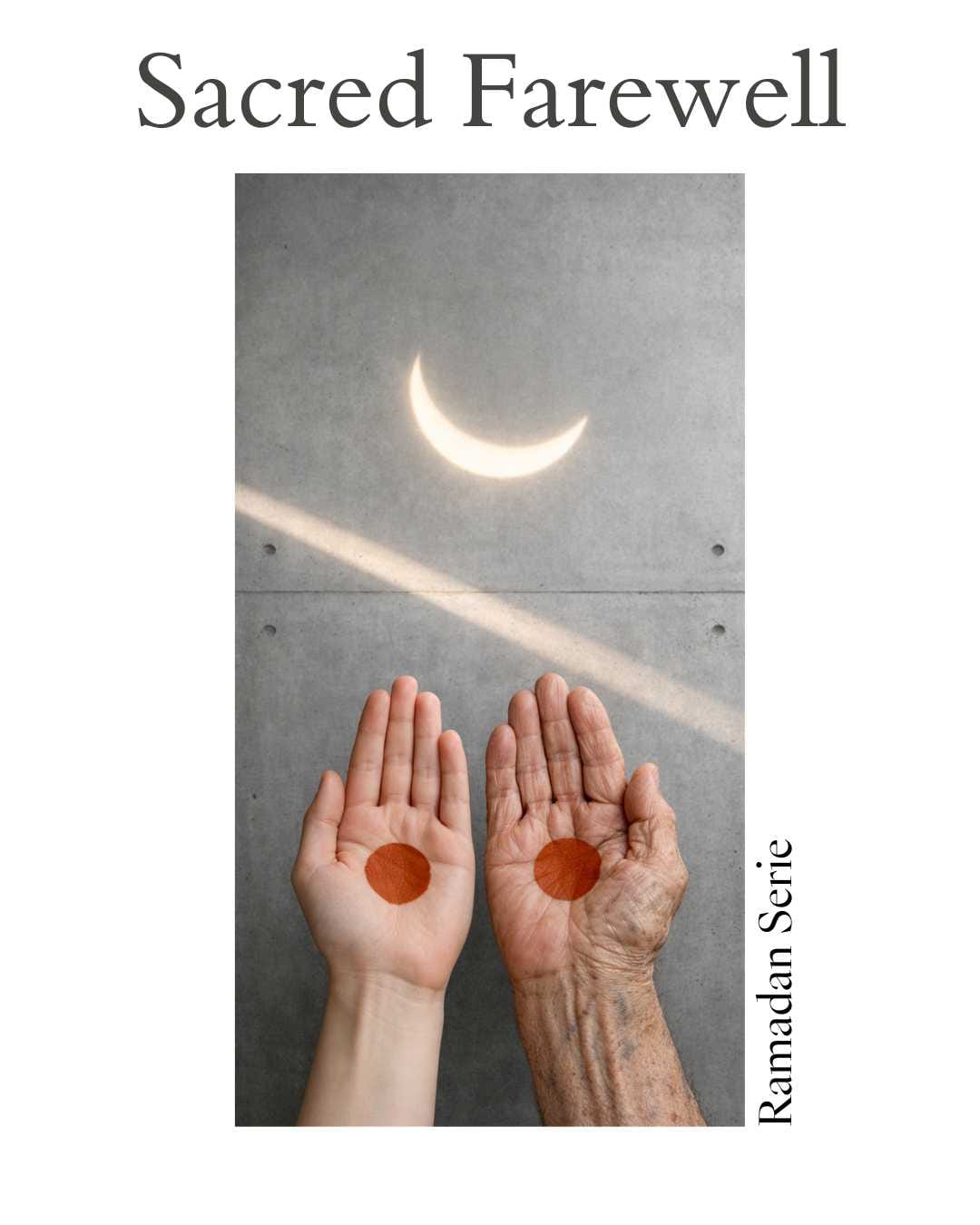
As Ramadan approaches its final days, the atmosphere quietly changes.
The rhythm of the month that once felt long and demanding suddenly accelerates.
Days seem shorter.
Nights feel more precious.
The believer becomes aware of something simple yet powerful:
Ramadan is leaving.
The sacred guest that arrived with the crescent moon, welcomed with hope, intention, and prayer is now preparing to depart.
And with that awareness comes a deeper realization.
None of us knows whether we will witness another Ramadan.
Every year that Allah ﷻ allows us to reach this blessed month is a gift.
A gift of time.
A gift of repentance.
A gift of realignment with what truly matters.
For this reason, the final days of Ramadan invite believers to pause and ask themselves a sincere question:
If this were my last Ramadan, how would I want to complete it?
Reflecting on the Journey of Ramadan
Ramadan is not simply a period of fasting. As we explored in our article From Hira to Civilization: How Ramadan Truly Begins, the month of Ramadan is rooted in the moment when revelation first descended and began shaping an entire civilization.
It is a school for the soul.
Through fasting, we learn patience.
Through prayer, we learn humility.
Through charity, we learn generosity.
Through restraint, we develop awareness.
As the month comes to its close, many believers naturally begin to reflect on what Ramadan has changed within them.
Have our prayers become more consistent?
Has the Qur’an become closer to our daily lives?
Has our heart become softer toward others?
Ramadan was never meant to be a temporary transformation.
It is meant to plant seeds that continue to grow long after the month has passed.
A Special Atmosphere in Mosques Around the World
During the final nights of Ramadan, mosques across the world carry a unique atmosphere.
After weeks of nightly recitation, many mosques reach the completion of the Qur’an during Tarawih prayers.
This moment is often deeply emotional.
The verses that have accompanied believers throughout the month reach their final pages.
For many worshippers, the completion of the Qur’an during Ramadan is a moment of gratitude, reflection, and sometimes tears.
It is a reminder of the central place the Qur’an holds in the life of a believer.
During these nights, Muslims also continue the search for Laylat al-Qadr, the sacred night described in the Qur’an and explored in our previous article The night that shape the year on the meaning of this unique night.
The believer continues striving until the very end.
The Final Effort
Every journey has a final stretch.
In many ways, the end of Ramadan resembles the final meters of a long path.
The body may feel tired.
Sleep may be shorter.
Daily responsibilities continue.
Yet the believer understands that the end of a journey deserves as much attention as its beginning.
The final days of Ramadan invite us to remain present.
Not through excess or exhaustion.
But through sincerity.
A quiet prayer.
A few verses of Qur’an.
A sincere supplication.
Sometimes these simple acts carry the greatest weight.
Why Duʿāʾ Matters in the Final Days
Among the most meaningful acts during the final days of Ramadan is duʿāʾ — sincere supplication.
Duʿāʾ is not simply asking for something.
It is a moment where the believer turns toward Allah ﷻ with humility, recognizing that guidance, forgiveness, and mercy ultimately come from Him.
The Prophet ﷺ taught believers a simple supplication for the final nights:
Allahumma innaka ʿafuwwun tuhibbu al-ʿafwa faʿfu ʿanni
(Reported in Tirmidhi)
O Allah, You are the Most Forgiving, and You love forgiveness, so forgive me.
These final days also remind believers to widen their prayers beyond themselves.
Many raise their hands to ask Allah ﷻ for mercy, relief, and justice for the wider Ummah including those who face hardship or oppression around the world, such as the people of Palestine, Sudan, the Uyghur community, and others enduring trials.
Faith reminds believers that the Ummah is connected beyond borders.
And duʿāʾ becomes a bridge of compassion between hearts.
Practical Ways to Honor the Final Days of Ramadan
Even small actions can help preserve the spirit of these precious days.
Protect a quiet moment each night
Even if the entire night cannot be spent in prayer, dedicating a focused moment for reflection, Qur’an, or duʿāʾ can transform the night.
Maintain a connection with the Qur’an
Even a few verses recited with reflection can anchor the heart.
Choose nourishing and balanced food
Simple and wholesome meals help maintain energy for prayer and reflection.
Reduce unnecessary distractions
Limiting digital noise and late-night distractions can help preserve the spiritual focus of Ramadan.
Use the last third of the night
For some believers, staying awake for the full Tarawih prayer every night may become difficult as Ramadan approaches its end.
Fatigue accumulates, responsibilities continue, and the body naturally needs rest.
When this happens, another option can be deeply meaningful.
Some believers choose to sleep earlier after Isha and wake up during the last third of the night.
The Prophet ﷺ said:
“Our Lord descends every night to the lowest heaven during the last third of the night and says: Who is calling upon Me so that I may answer him? Who is asking of Me so that I may give him? Who is seeking My forgiveness so that I may forgive him?”
(Sahih al-Bukhari, Sahih Muslim)
This quiet time before dawn can become a powerful moment for prayer, recitation of the Qur’an, and sincere duʿāʾ.
Of course, praying Tarawih in the mosque remains a beautiful act of worship.
But when exhaustion makes it difficult, choosing another sincere path of worship is far better than doing nothing.
Ask Allah ﷻ for the year ahead
The end of Ramadan is also a moment to ask Allah ﷻ for guidance, forgiveness, and Barakah in the months to come.
Ask Allah ﷻ to reach another Ramadan
Many believers end their supplications with a simple hope:
To be granted life, faith, and strength to witness another Ramadan.
Closing Reflection
As Ramadan prepares to depart, the believer realizes that the true journey is only beginning.
The month has reminded us of who we can become.
May Allah ﷻ accept what was sincere.
May He forgive what was imperfect.
And may He allow us to continue working on our Taqwa throughout the rest of the year, striving to become better, a little more sincere, a little more present, every day.
And if it is written for us, may Allah ﷻ allow us to witness another Ramadan with hearts that remember what this one has taught us.
Ramadan may be leaving, but the path toward taqwa continues — one sincere step at a time.
Summary
The final days of Ramadan are a moment of reflection, gratitude, and intention.
As the sacred month prepares to depart, believers remember that every Ramadan is a gift from Allah ﷻ — an opportunity to return, to realign, and to grow spiritually.
These last days invite Muslims to finish the month with sincerity and to carry the lessons of Ramadan into the rest of the year.
Because the true success of Ramadan is not only how we lived during the month.
It is what remains after it ends.
FAQ
Why are the last days of Ramadan important?
Why are the last days of Ramadan important?
The final days of Ramadan allow believers to reflect on the spiritual journey of the month and to complete it with sincerity, gratitude, and renewed intention.
What should Muslims do at the end of Ramadan?
What should Muslims do at the end of Ramadan?
Many believers increase prayer, recite the Qur’an, make duʿāʾ, give charity, and reflect on how to maintain the habits developed during Ramadan.
Why do many mosques complete the Qur’an at the end of Ramadan?
Why do many mosques complete the Qur’an at the end of Ramadan?
During Tarawih prayers, a portion of the Qur’an is recited each night throughout Ramadan. By the final nights, the full Qur’an is often completed, making it a meaningful and emotional moment for worshippers.
How can Muslims keep the spirit of Ramadan after the month ends?
How can Muslims keep the spirit of Ramadan after the month ends?
Maintaining daily prayer, continuing to read the Qur’an, practicing gratitude, and performing acts of charity help preserve the spiritual momentum built during Ramadan.