In the Qur’an, ALLAH ﷻ says:
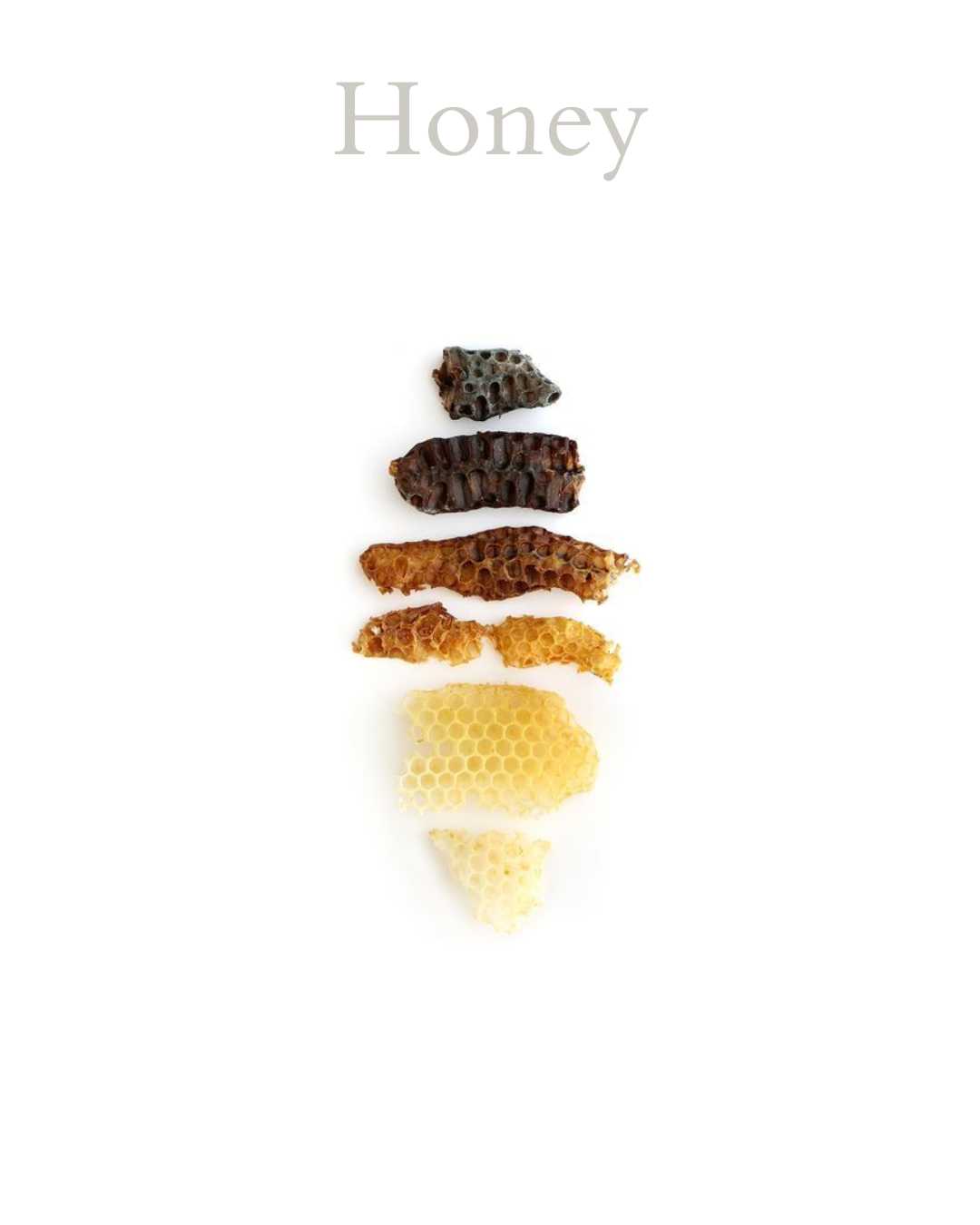
“From their bellies comes a drink of varying colors, wherein is healing for mankind. Indeed in that is a sign for a people who give thought.”
Qur’an, Surah An-Nahl (16) verse 69
Honey is not merely a sweet substance.
It is a nectar — a precious gift encoded with meaning.
From countless blossoms, bees gather what cannot be forced, only received. Each variety of honey carries the imprint of its land: the soil, the climate, the season, the flowers it passed through. From wildflower and thyme to acacia and citrus blossom, honey speaks in colors, aromas, and textures.
This diversity is not decorative.
It is intentional.
ALLAH ﷻ did not describe honey by accident. He named it “a drink of varying colors” — a plural reality, across lands and times and described within it healing for mankind. Not as a slogan. Not as a trend. But as a sign.
A sign that nourishment is not uniform.
That healing adapts.
That provision arrives in many forms, suited to different needs.
Bees themselves live with discipline.
They communicate with precision.
They serve a higher order.
From fragile wings comes a substance more enduring than gold.
What astonishes is not only what bees produce, but how they produce it.
Through a precise and silent choreography known as the waggle dance, bees transmit exact information: direction, distance, and quality of nectar sources. No noise. No confusion. Only movement encoded with purpose.
An ancient form of communication.
Mathematical.
Exact.
Efficient.
Long before modern observation described it, this order was already revealed.
Today, science observes what revelation already pointed toward:
- Honey supports wound healing and tissue regeneration
- It has antibacterial, antiviral, and antifungal properties
- It contributes to immune resilience and energy restoration
- In contemporary medical settings, honey-based dressings are used in wound care
Bees live by rhythm and role. Worker bees — those who gather nectar and produce honey — live for weeks during active seasons, and sometimes for months depending on climate and purpose. The queen lives for years. Each life span is different, yet each serves the same balance.
In a limited existence, something timeless is produced.
This is not random.
This is not coincidence.
This is sacred knowledge encoded in nature.
In Islamic tradition, honey was never treated as a miracle product nor reduced to folklore. It was respected as a reference, something to observe, to use with measure, and to return to when seeking balance.
Honey teaches us proportion.
Effort without excess.
Precision without noise.
Value without spectacle.
It reminds us that what nourishes deeply is often simple, close, and already provided.
To reconnect with honey is not to chase a trend.
It is to return to something familiar yet forgotten.
To choose what was placed near us.
To trust what was given with wisdom.
To nourish the body with what respects its rhythm.
Let the bee inspire your own way of living,
Live with intention.
Communicate with purpose.
Produce what nourishes, not what distracts.
And let honey reclaim its place not as an artificial substitute, but as it was always meant to be,
close to nature, close to the body, close to balance.
A gift — cultivated.
A remedy — respected.
A reference — made tangible.
Al Hamdoulillah.
And then, the question remains, timeless, unaltered, addressed to every generation:
“So which of the favors of your Lord will you deny?”
Qur’an, Surah Ar-Rahman (55) verse 13