Purity of Intention, An Islamic Art of Living and Thinking
There is a difference between acting
and being rightly oriented.
Between doing something
and knowing for whom it is done.
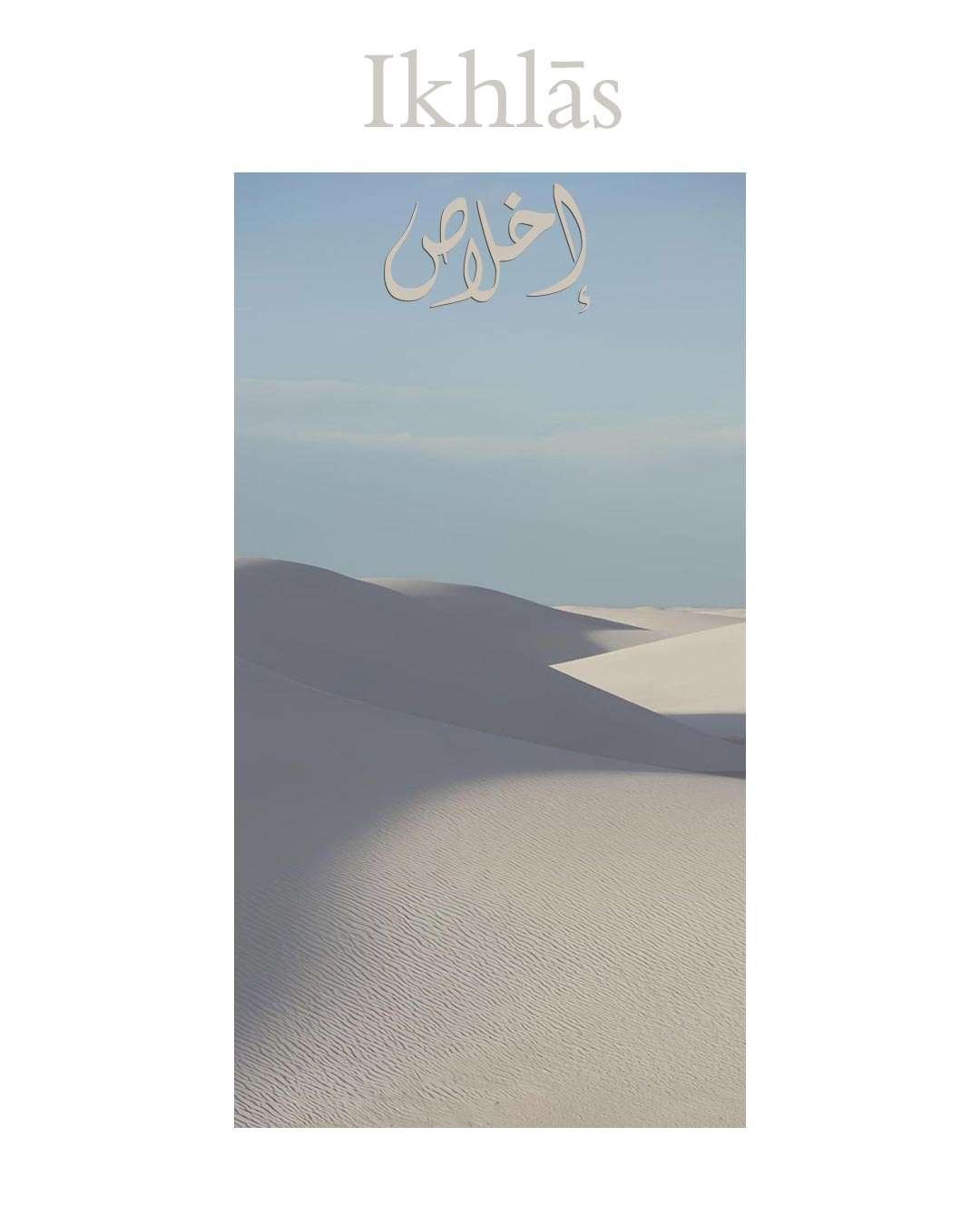
In Islam, this difference has a name: Ikhlās – إخلاص.
Ikhlāṣ is usually translated as sincerity.
But more precisely, it means purifying intention.
Removing what is mixed.
Stripping away what distracts.
Returning an act to its true direction.
In a world shaped by visibility, Ikhlāṣ is quietly radical.
We live in a time where the self is constantly exposed, measured, displayed. Where actions are often validated only once they are seen. Where value is confused with attention, and meaning with performance. Sociologically, the ego has become a public project, curated, branded, optimized.
The modern world invites us to act toward the gaze of others.
Ikhlāṣ asks something entirely different.
It asks for orientation.
Orientation toward Allah ﷻ.
Orientation toward what is fair.
Orientation toward what is right, even when it is not rewarded, applauded, or understood.
Ikhlāṣ is not withdrawal from the world.
It is clarity within it.
In Islam, perfection is never the human task, it is the attribute of Allah ﷻ.
What is asked of us is effort, sincerity, and alignment.
This is why Ikhlāṣ does not mean passivity.
It means acting without ego.
Doing the work without needing ownership.
Choosing fairness even when others expect advantage.
Building without shaping everything around the self.
This inner discipline is inseparable from belief.
There is a Surah in the Qur’an called Al-Ikhlāṣ, and it is among the most central chapters of Islam. It says:
Say: He is Allah, the One.
Allah, the Absolute.
He begets not, nor is He begotten.
And there is nothing comparable to Him.
This Surah purifies belief.
It clears away projections, idols, intermediaries.
It recenters the heart around what is One, absolute, and not dependent on anything else.
Ikhlāṣ in action does the same but in life.
Just as Surah al-Ikhlāṣ teaches Muslims who Allah ﷻ is,
Ikhlāṣ as a practice teaches them how to live.
It shapes daily behavior:
- how one works,
- how one creates,
- how one speaks,
- how one treats others,
- how one resists injustice even when it costs.
For Muslims, Ikhlāṣ is a core value because it protects intention from corruption. It keeps action from being hijacked by ego, fear, or social pressure. It allows a person to remain upright in a world that constantly pulls toward self-display.
For those unfamiliar with Islam, Ikhlāṣ can be understood as this:
acting according to conscience and truth, rather than applause or advantage.
This is why Ikhlāṣ builds bridges.
It creates trust without spectacle.
Consistency without branding.
Ethics without performance.
It reminds us that not everything meaningful must be visible. That sincerity has a social impact, even when it remains unseen. That a society is not only shaped by what is shown, but by what is quietly upheld.
Ikhlāṣ does not shout.
It does not advertise itself.
It does not chase recognition.
It steadies intention.
It refines action.
It anchors the self.
This is what we call an Islamic Art of Living.
And because the way we live shapes the way we decide, Ikhlāṣ is also an Islamic Art of Thinking, a way of choosing orientation over ego, truth over advantage, alignment over approval.
This is the hidden art of Ikhlāṣ.
Not purity as withdrawal.
But purity as direction.
In a noisy world, it teaches us where to stand.
La ilaha ila ALLAH.