What if one of summer’s familiar fruits is also an invitation to see Creation differently?
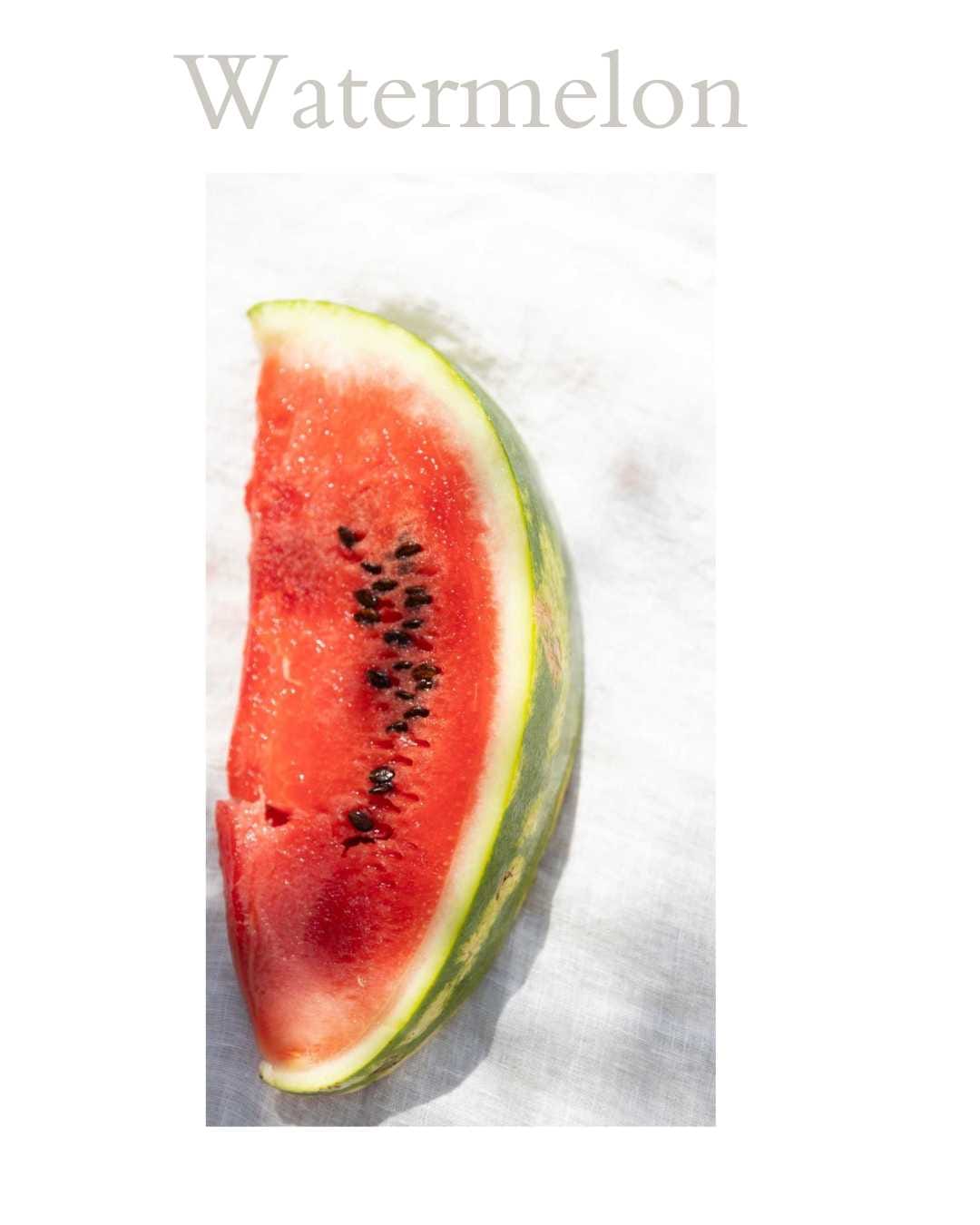
Before the knife enters, the watermelon reveals almost nothing.
A dark green weight. Cool beneath the hand. Quiet.
Then it opens.
Red beneath green. Sweetness held inside water. Black seeds scattered through the flesh like small promises of another summer.
We know this fruit so well that we have stopped seeing it.
It appears on family tables, in the hands of children waiting for the first slice. We call it refreshing. We call it summer.
But perhaps we have not yet asked the most beautiful question:
How did rain become fruit?
The image is poetic, but the journey is real: rain replenishes the earth and its water sources; through its roots, the plant absorbs water and gathers it within a fruit composed of more than 90 per cent water.
A Fruit Made for the Heat
Watermelon is more than 90 per cent water. A 100-gram serving contains around 30 calories, alongside vitamin C and naturally occurring compounds including lycopene, the pigment behind its red colour and L-citrulline, an amino acid involved in the body’s production of nitric oxide.
Research has explored watermelon and L-citrulline in relation to vascular function and exercise recovery. The results are interesting, but not absolute. Watermelon need not become a “superfood” to deserve our attention.
Its most evident gift is already remarkable.
When the summer heat settles over the earth and the body asks for water, the earth offers a fruit that carries water within it.
Not in a transparent vessel, but beneath a patterned rind. Not without pleasure, but coloured, fragrant and sweet.
Its season arrives with the heat: thirst, then refreshment; summer, then a fruit composed largely of water.
Science tells us what it contains.
But science alone cannot tell us how to look at it.
When Rain Returns as Sweetness
The Qur’an does not mention watermelon by name. It gives us something wider: a language through which to read the world.
Allah ﷻ says:
“And He is the One Who sends down rain from the sky—from which you drink and by which plants grow.”
Surah An-Naḥl, 16:10
The next verse continues:
“With it He produces for you various crops, olives, palm trees, grapevines, and every type of fruit. Surely in this is a sign for those who reflect.”
Surah An-Naḥl, 16:11
The Qur’an asks us to follow the journey.
Water descends. Soil receives it. Roots draw it upward. A flower becomes fruit. What fell from the sky returns to us transformed.
Cut through a watermelon and rain appears to return—no longer clear, but red; no longer falling, but held; no longer only water, but sweetness.
The rind protects. The colour announces ripeness. The flesh refreshes. The seeds carry continuity.
Nothing needs to be decorated after its usefulness. Beauty and purpose arrive together.
Perhaps this is one way to understand Al Qadr—Allah’s wisdom beyond our understanding: not by claiming to know every purpose, but by learning to recognise measure, timing and order without reducing them to accident.
Summer brings thirst.
And inside its heat, Allah ﷻ places relief.
Watermelon and Dates in the Sunnah
The Qur’an teaches us to contemplate Creation. The Sunnah teaches us how to receive it.
ʿĀʾishah, may Allah be pleased with her, narrated:
“The Prophet Muhammad ﷺ would eat melon with fresh dates.”
Jāmiʿ at-Tirmidhī, Hadith 1843 — ḥasan gharīb
The Arabic word al-biṭṭīkh refers to melon and is commonly understood in this context to include watermelon. Another narration preserves the meaning of the pairing:
“The heat of the one is broken by the coolness of the other, and the coolness of the one by the heat of the other.”
Sunan Abī Dāwūd, Hadith 3836 — ḥasan
This is the language through which foods were understood at the time, not a modern clinical formula. Yet the practice remains elegant.
The date is concentrated: small, dense and intensely sweet.
The melon is expansive: cool, abundant and filled with water.
The Prophet Muhammad ﷺ brought them together.
This is nourishment understood not as obsession, but as relationship. Not the endless pursuit of a perfect ingredient, but the intelligence of proportion.
Modern wellness often searches for a hero: the newest powder or single food expected to repair the complexity of the body.
The Sunnah offers something quieter.
Balance on a plate.
Have Abundance and Attention Parted Ways?
Today, watermelon can be found in winter. Distance and season have become almost invisible. When everything is always available, arrival loses its meaning.
For centuries, food marked time. The first fruit was awaited. Eating seasonally need not become another performance; it may simply restore attention to the difference between availability and harmony.
This is close to barakah when more cannot be measured by quantity alone. A table can hold every fruit and still leave us untouched. A single slice can return us to gratitude.
Perhaps the loss is that we no longer pause before what we have.
Learning to See Before We Consume
The body is an Amānah—a trust from Allah ﷻ. Caring for it is not vanity, but gratitude made visible.
There is iḥsān in this care: choosing with attention, receiving without excess, and bringing excellence to an ordinary gesture.
But nourishment begins even before eating.
It begins with seeing.
Look again at the watermelon.
At its restrained exterior and concealed abundance. At the improbable red. At water made sweet. At seeds carrying a future harvest.
Science can name its compounds. It can measure hydration, calories and nutrients. Revelation teaches us that usefulness is not the end of knowledge.
Beyond the nutrient is the sign.
Beyond consumption is contemplation.
Beyond familiarity is wonder, waiting to be recovered.
The watermelon does not need to perform a miracle to deserve our attention. Its existence is already worthy of it.
Perhaps the way we nourish ourselves begins here: not with a diet, nor with the next promise of optimisation, but with the courage to look again at what has always been before us.
A fruit opened in summer.
Rain, held inside colour.
And a question returning not as a refrain added to the end, but as the only response left when seeing becomes recognition:
“Then which of the favours of your Lord will you deny?”
Surah Ar-Raḥmān, 55:13