Why Your First Days of Ramadan Are Preparing You for Laylat al-Qadr
The Summit Is Built at the Base
Laylat al-Qadr is not simply the end of Ramadan.
It is the night that began revelation.
Allah ﷻ says:
(Qur’an 97:1)
“Indeed, We sent it down during Laylat al-Qadr.”
And:
“The month of Ramadan is that in which the Qur’an was revealed as guidance for humanity…”
(Qur’an 2:185)
Laylat al-Qadr belongs to the final ten nights of Ramadan.
But its preparation begins in the first.
If sleep is chaotic now, exhaustion will dominate later.
If Taraweeh is inconsistent now, stamina will collapse in the final stretch.
If discipline is delayed now, clarity will be weak when it matters most.
Ramadan is not a sprint of emotion.
It is a structured ascent.
And the first days determine the strength of the summit.
Laylat al-Qadr: The Beginning of Revelation
The Qur’an establishes clearly:
“Indeed, We sent it down during Laylat al-Qadr.”
(Qur’an 97:1)
Revelation began on this night.
The Qur’an was then revealed gradually to the Prophet Muhammad ﷺ over approximately 23 years.
Ramadan therefore does not merely commemorate fasting.
It commemorates the descent of guidance.
And today, 1,447 years later — Muslims continue to recite the same Qur’an.
Allah ﷻ promises:
“Indeed, We have sent down the Reminder, and indeed, We will preserve it.”
(Qur’an 15:9)
From Senegal to Nigeria.
From Ethiopia to Indonesia.
From Cairo to London.
From small village mosques to global cities.
The same revelation is recited.
Preserved.
Memorized.
Heard.
Standing in Revelation: Taraweeh Across the World
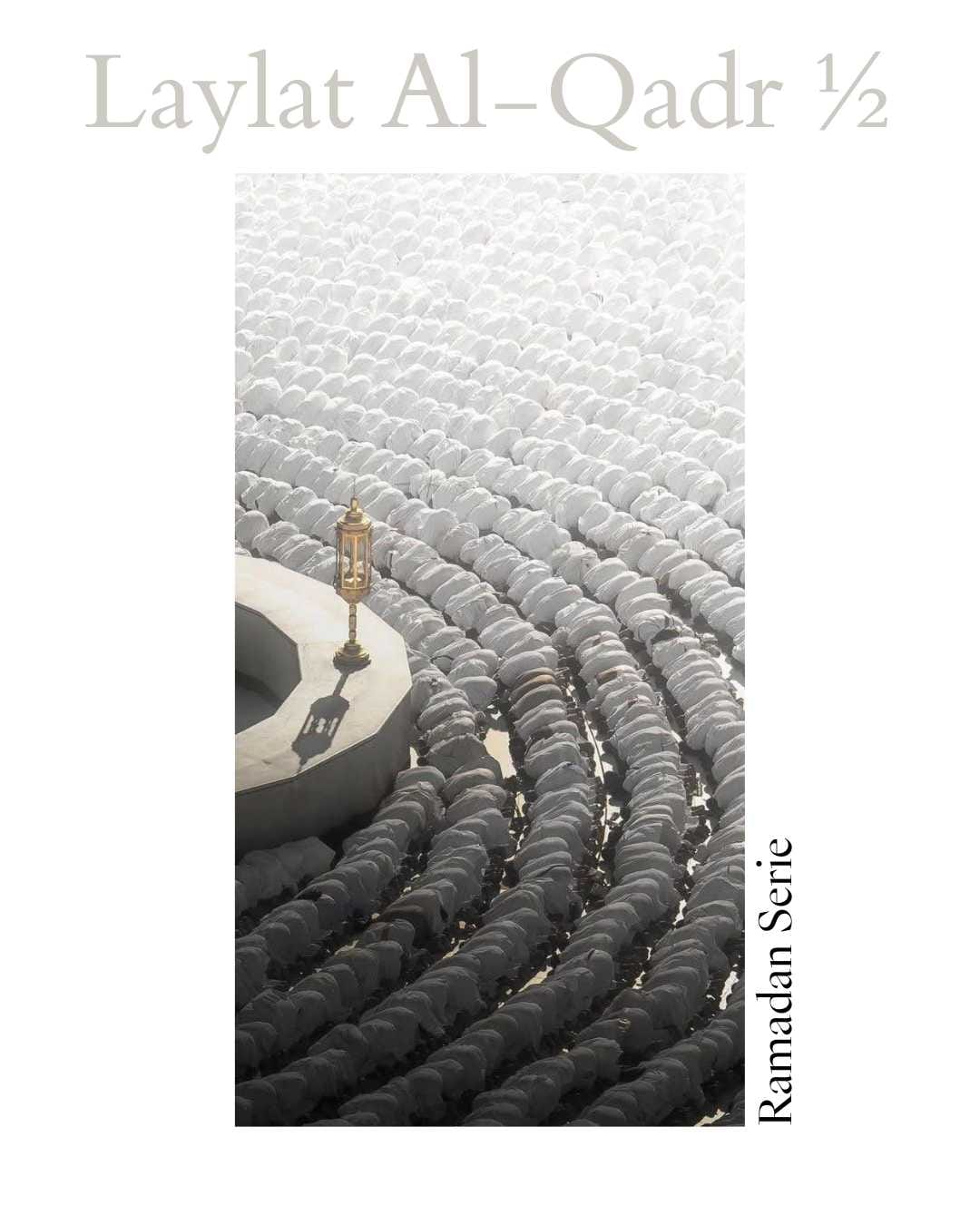
After ‘Isha — the final obligatory prayer of the day in Islam — Muslims gather for Taraweeh, a voluntary night prayer specific to Ramadan.
During Taraweeh:
- Extended portions of the Qur’an are recited aloud.
- In many mosques, the entire Qur’an is completed across the month.
- Communities stand listening to revelation night after night.
This is why mosques are full in Ramadan.
It is not decoration.
It is not performance.
It is standing with the same Qur’an revealed in this month.
Across Africa, the Middle East, Europe, Asia, and the Americas, Muslims stand nightly in synchronized recitation.
Different languages surround it.
But the same Book is heard.
Ramadan becomes a global act of listening to revelation.
Laylat al-Qadr: A Night of Decree
The Qur’an describes this night further:
“On that night every precise matter is made distinct.”
(Qur’an 44:4)
Laylat al-Qadr is associated with divine decree.
It is a night in which matters are determined by Allah ﷻ.
This is why worship intensifies.
This is why supplication deepens.
This is why hearts become urgent.
The Power of Dua on Laylat al-Qadr
Dua means supplication — speaking directly to Allah ﷻ with hope, humility, and dependence.
The Prophet ﷺ said:
“Dua is worship.”
(Tirmidhi — authenticated by scholars)
Aisha (ra) asked the Prophet ﷺ:
“If I know which night is Laylat al-Qadr, what should I say?”
He replied:
“Say: Allahumma innaka ‘afuwwun tuhibbul-‘afwa fa‘fu ‘anni.”
(Tirmidhi — sahih)
“O Allah, You are Most Forgiving, and You love forgiveness, so forgive me.”
Laylat al-Qadr is not passive observation.
It is active asking.
Prayer.
Supplication.
Standing.
Seeking.
Why We Do Not Know the Exact Date
The Prophet ﷺ did not fix Laylat al-Qadr to one specific confirmed night.
He said:
“Seek it in the last ten nights of Ramadan.”
(Sahih al-Bukhari, Sahih Muslim)
And:
“Seek it in the odd nights of the last ten.”
(Bukhari)
Although many associate it culturally with the 27th night, the Prophet ﷺ instructed believers to search for it — especially on the odd-numbered nights (21st, 23rd, 25th, 27th, 29th).
This uncertainty carries wisdom:
It prevents complacency.
It spreads worship across multiple nights.
It rewards sustained effort.
Laylat al-Qadr is sought — not assumed.
The Real Center of Ramadan: The Night
Fasting during the day disciplines the body.
But Ramadan’s transformation unfolds at night.
The rhythm becomes:
- Iftar (breaking the fast at sunset)
- ‘Isha (final obligatory prayer)
- Taraweeh (extended Qur’an recitation)
- Suhoor (pre-dawn meal)
- Tahajjud (voluntary prayer before Fajr)
When physical intake is reduced, spiritual receptivity often increases. Ramadan lightens the body so the heart can rise.
But elevation requires structure.
Ramadan in Non-Muslim Countries: Structured Intention
For Muslims living in non-Muslim-majority countries, in Europe, North America, parts of Asia, or secular urban environments, Ramadan requires deliberate organization.
Work schedules continue.
Schools remain open.
Public life does not pause.
Long daylight hours in cities like London, Paris, Toronto, or Berlin can intensify physical fatigue. In some regions of Northern Europe, fasting days can extend significantly during certain years.
This reality makes early recalibration essential.
Without disciplined sleep, moderate iftar, and intentional night planning, exhaustion can peak just as the final ten nights begin.
Ramadan in a non-Muslim country therefore becomes an act of quiet resilience.
It is not only fasting.
It is strategic alignment within a secular rhythm.
The believer reorganizes the private sphere, sleep, meals, time to protect the sacred hours of the night.
Preparation is not luxury.
It is necessity.
The Last Third of the Night
The Prophet ﷺ said:
“Our Lord descends every night to the lowest heaven during the last third of the night…”
(Sahih al-Bukhari, Sahih Muslim)
This time is described as a moment of invitation.
The Qur’an praises those who rise at night:
“They arise from their beds; they supplicate their Lord…”
(Qur’an 32:16)
The final third of the night is:
- Quiet
- Focused
- Free from distraction
- Spiritually expansive
Ramadan trains believers to reach this hour intentionally.
Tahajjud and Qiyam al-Layl
Qiyam al-Layl means standing in voluntary night prayer.
Tahajjud refers specifically to prayer performed after sleeping and waking before Fajr.
The Prophet ﷺ maintained night prayer throughout his life — in Mecca and Medina — not only in Ramadan. In Ramadan, his devotion intensified, especially during the last ten nights.
Taraweeh anchors the community.
Tahajjud refines the individual.
Qaylulah: Prophetic Time Management
Qaylulah refers to a short midday rest.
It was practiced by the Prophet ﷺ and early Muslims to support night worship.
It preserves stamina.
It balances endurance.
Ramadan does not require chaos.
It requires reorganization.
Why Preparation Begins in the First Days
If Laylat al-Qadr lies in the last ten nights, strength must be built early.
The first ten days are calibration.
Moderate iftar protects night clarity.
Stable sleep protects Tahajjud.
Consistent Taraweeh builds endurance.
Laylat al-Qadr is not reached by accident.
It is reached by alignment.
Practical Steps
• Simplify iftar to protect energy.
• Stabilize Taraweeh attendance.
• Begin Tahajjud gradually.
• Introduce qailulah when possible.
• Reduce distraction at night.
• Intend the final ten nights now.
Small adjustments now shape powerful endings later.
Laylat al-Qadr is the night revelation began.
It is a night of decree.
It is a night of supplication.
And it is sought — not assumed.
The first days of Ramadan are not separate from it.
They are preparation for it.
Align early.
Stand in revelation.
And when the night arrives — be ready.
Summary
Laylat al-Qadr marks the beginning of Qur’anic revelation (97:1) and occurs within the final ten nights of Ramadan. The Qur’an was revealed gradually over 23 years and remains preserved (15:9). Preparing for Laylat al-Qadr begins in the first days of Ramadan through structured night worship, disciplined sleep, and intentional supplication.
What is Laylat al-Qadr?
What is Laylat al-Qadr?
The Night of Decree mentioned in Qur’an 97. It marks the beginning of revelation and is better than a thousand months.
When does Laylat al-Qadr occur?
When does Laylat al-Qadr occur?
In the last ten nights of Ramadan, particularly the odd nights (Bukhari, Muslim).
Why is dua important on Laylat al-Qadr?
Why is dua important on Laylat al-Qadr?
Because it is a night of decree and divine invitation. The Prophet ﷺ recommended specific supplication (Tirmidhi).
What is Taraweeh?
What is Taraweeh?
A voluntary congregational prayer after ‘Isha in Ramadan that includes extended Qur’an recitation.
What is Tahajjud?
What is Tahajjud?
Voluntary night prayer performed after sleeping before Fajr.
What is Qailulah?
What is Qailulah?
A short midday rest practiced by the Prophet ﷺ to support night worship.