An Islamic Art of Living
This is what is meant by an Islamic Art of Living.
Not a product.
Not a trend.
Not a slogan.
But a way of being in the world, rooted in remembrance, shaped by rhythm, and guided by presence.
An art of living that does not begin with optimization, but with alignment.
That does not separate the spiritual from the practical, or the sacred from the everyday.
That understands work, creation, rest, and ambition as acts that carry intention and therefore responsibility.
Islamic Art of Living is not about adding something new to life.
It is about returning to what has always been there.
To the intelligence of creation.
To barakah over pressure.
To rhythm over speed.
To building in a way that respects what we are made of.
This way of thinking does not reject modernity.
It disciplines it.
It asks a simple, demanding question before every act of creation:
Is this aligned with who we are, and how we were created to live?
What follows is not theory.
It is a posture.
A way of thinking that informs how we build, decide, create, and endure.
Some truths do not stay in the mind.
They settle in the body.
In the hands.
In the breath.
In the way we move through the world.
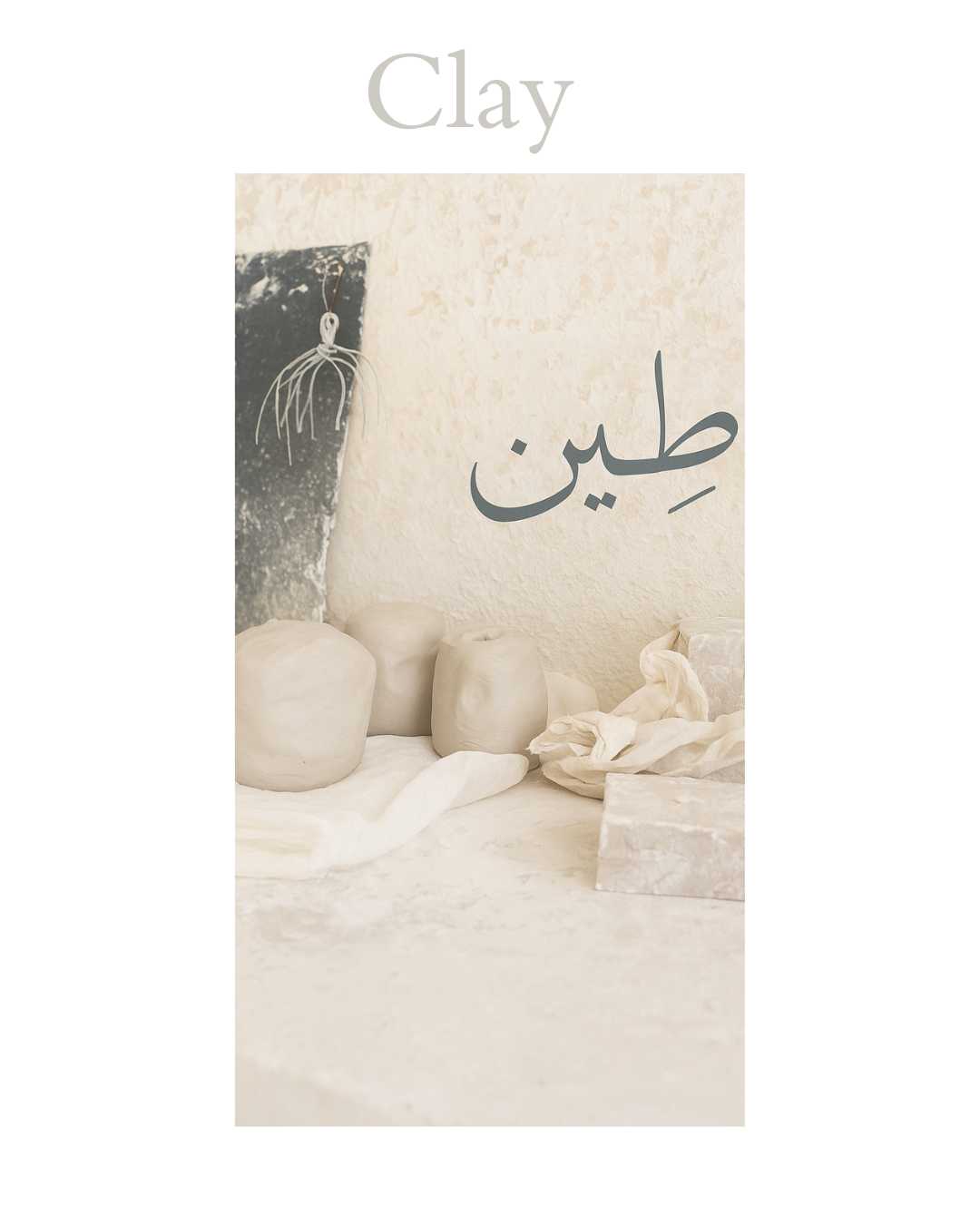
We are reminded that we were formed from earth, from clay.
Not metaphorically.
Materially.
Clay is not fast.
It does not perform.
It does not respond to pressure.
It responds to rhythm.
To patience.
To presence.
Anyone who has worked with it knows this. Even softened by water, clay resists haste. It dries the skin. It slows the gesture. It demands attention. You cannot force it into shape without consequence. Push too hard, and it cracks. Rush the process, and it collapses.
Clay teaches by resistance.
And yet, it holds memory.
Every movement leaves a trace.
Every pause matters.
This is not incidental. It is instructive.
We often try to build our lives, our work, our ambitions as if we were made of steel, optimized, accelerated, industrialized. We chase scale, visibility, constant output. We mistake pressure for excellence and speed for progress.
But we are not made of steel.
We are made of clay.
Clay requires balance.
Too much force breaks it.
Too little attention leaves it shapeless.
It asks for measured gestures.
For breath.
For coherence between intention and action.
This understanding changes everything.
What if creation was not about domination, but cooperation with material reality?
What if entrepreneurship was not about pressure, but about presence?
What if progress was not measured by speed, but by alignment?
Clay cures slowly.
It strengthens over time.
It remembers how it was treated.
So do we.
This is the essence of an art of living, not as an aesthetic, but as a discipline. A way of being attentive to what we are made of, and therefore, how we should build.
Not louder.
Not faster.
But truer.
To return to this knowledge is not regression.
It is remembrance.
Everything essential has already been revealed. What we call innovation is often just a rediscovery, a return to principles we have always carried.
To live well is not to escape our nature, but to honor it.
And to build something that lasts, we must first build in a way that respects the material we are made of.
Bismillah