Perfume, Remembrance, and the Awakening of the Senses
Perfume is not merely fragrance.
It is the architecture of the invisible.
An art form capable of shaping memory, movement, and emotion out of air.
A discipline that builds presence without weight, and meaning without permanence.
In Islamic culture, scent has never been secondary.
The Prophet Muhammad ﷺ taught that among the things he loved most in this world were women, prayer, and perfume.
From this teaching, I learned something essential: perfume is not a distraction — it is remembrance.
A silent form of contemplation.
A way to lift the soul toward beauty.
Perfume as a Living Architecture
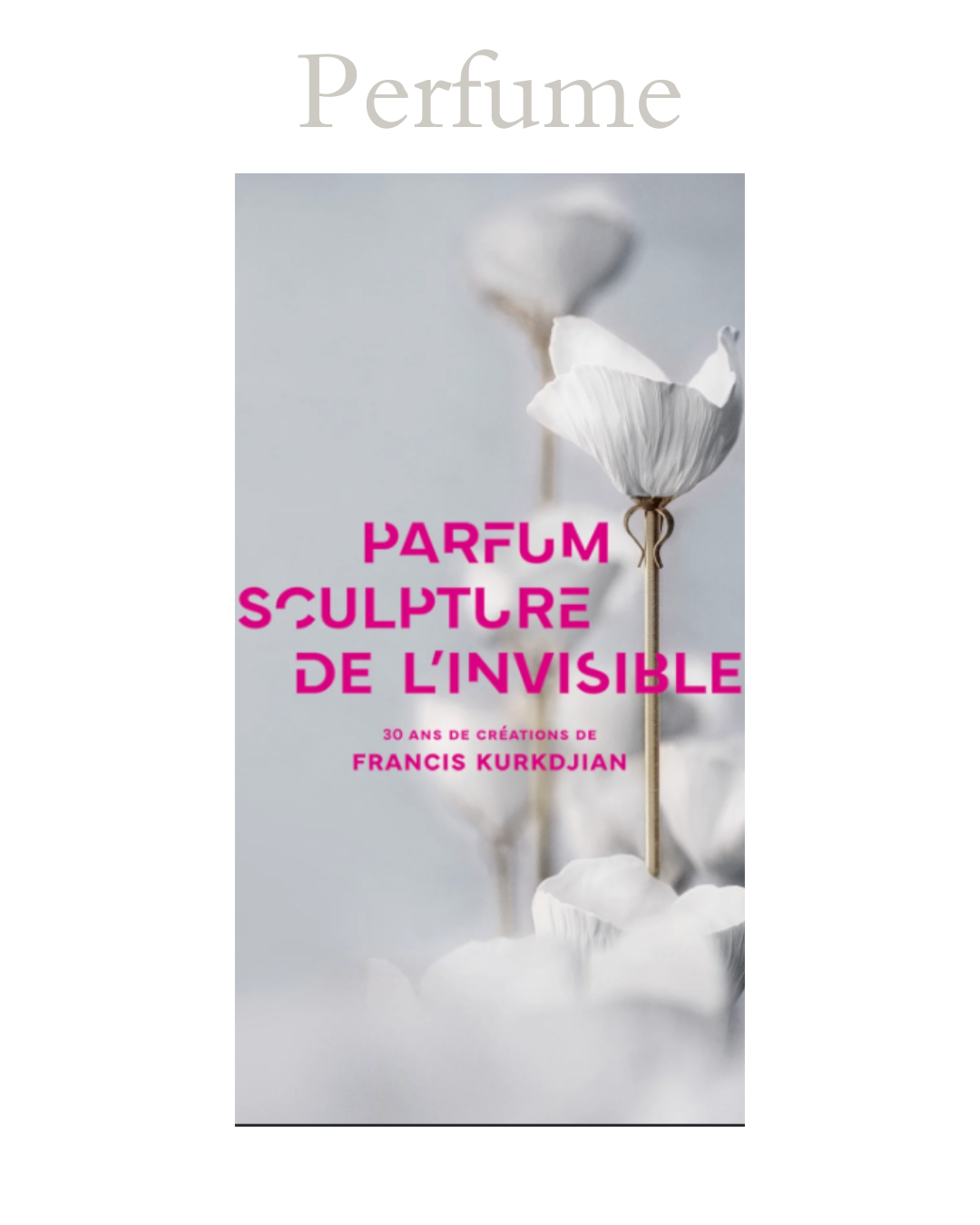
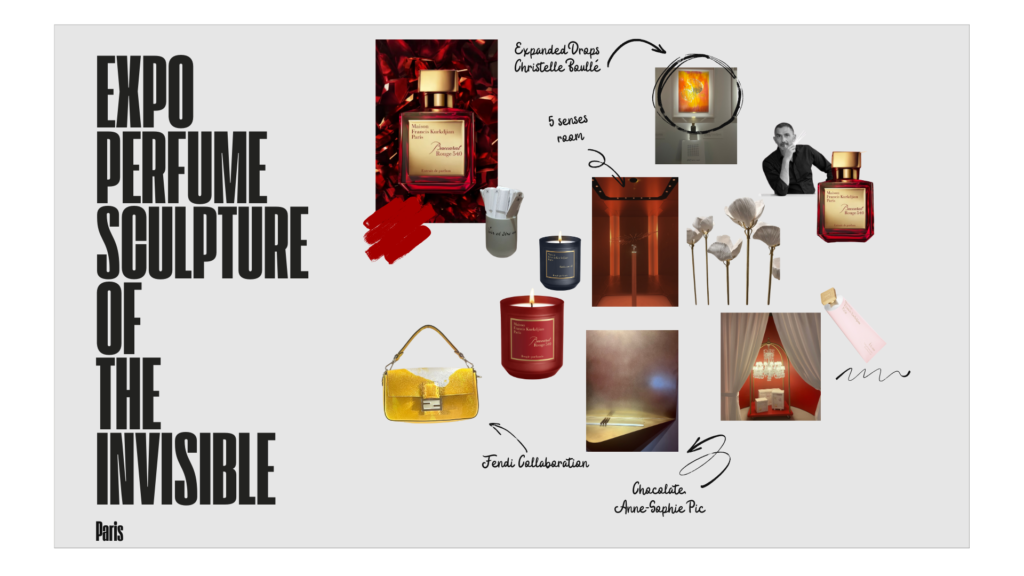
When I walked into Perfume, Sculpture of the Invisible — 30 Years of Creation by Francis Kurkdjian” at the Palais de Tokyo in Paris, I did not enter a conventional exhibition.
I entered an experience.
This was not an olfactory display alone.
It was a carefully composed architecture of perception — where light, crystal, texture, scent, sound, and space worked together as one.
Every sense was awakened.
Every movement was intentional.
Through the work of Maison Francis Kurkdjian, perfume revealed itself not as luxury, but as structure — an invisible architecture capable of shaping inner states.
Making the Invisible Visible
Among the most striking expressions was the work of Christelle Boulé, who captures perfume through light itself.
Drops of fragrance placed on silver-based paper react chemically, revealing shapes and colors transforming scent into image.
Breath becomes trace.
Presence becomes visible.
In another dialogue between disciplines, Anne-Sophie Pic, the three-star chef, translated Baccarat Rouge 540 into taste.
Saffron, warmth, and depth unfolded on the tongue — where flavor, scent, sound, and sight converged into a single harmony of perception.
This was not spectacle.
It was translation.
A Memory of Alhambra — When the Senses Lead to the Sacred
What I felt in the final room of the exhibition was not unfamiliar.
It echoed something I had experienced before — profoundly — in the gardens of the Alhambra.
There, the architects did not build merely for the eye.
They composed an experience designed to awaken the five senses, guiding the visitor toward contemplation.
You hear the water flowing softly through the fountains, rhythmic and constant.
You smell the orange blossoms suspended in the air.
You see geometry carved with precision, gardens unfolding with balance and intention.
You feel the coolness of stone beneath your hand, the measured transition between light and shade.
Nothing is accidental.
Everything is orchestrated.
The goal was never decoration.
It was orientation.
In Islamic architecture, the garden was conceived as an echo of Paradise — not a representation, but a reminder.
A sensory pathway meant to soften the heart, quiet the mind, and awaken awareness of the Creator.
Standing in the last room of the exhibition, surrounded by scent, light, sound, texture, and rhythm — I recognized the same process at work.
Different context.
Different intention.
But the same architecture of perception.
Every sense was engaged.
Every distraction dissolved.
The body slowed.
Attention sharpened.
For a Muslim, this awakening of the senses has a direction.
It leads toward remembrance.
Toward Allah ﷻ, Al-Jamīl — The Most Beautiful,
who loves beauty, and through whom beauty becomes a sign rather than an end.
In both Alhambra and this contemporary exhibition, the senses were not stimulated to consume, but to contemplate.
To feel presence.
To perceive harmony.
To remember.
East and West, Seeking the Same Truth
That day, something became clear.
East and West are not opposites.
They are languages seeking the same truth:
to awaken the soul through beauty.
When art engages every sense, it reconnects us to the Source.
It reminds us that the world was not created to be consumed,
but to be contemplated.
This is where Islamic Art of Living becomes a universal invitation
to experience beauty with depth, intelligence, and faith.
Beauty as Remembrance
Beauty is not entertainment.
It is remembrance.
And when one lives with awareness and love,
the signs of the Creator are seen everywhere.
Al hamdoulillah.
This is the legacy we carry forward.
This is the dialogue between who we are and the world we inhabit.
This is Legacy & Beyond.