The halal industry is often mentioned, rarely explained, and frequently misunderstood.
For some, it is reduced to food. For others, to certification. For many, it remains vague, a growing market without a clear structure.
In reality, the halal industry is a global economic system with defined rules, institutions, standards, and innovation pathways. Understanding it requires moving beyond assumptions and engaging with its architecture.
This article is an educational guide to what the halal industry truly is today and where it is heading.
What Is the Halal Industry?
At its core, the halal industry refers to all economic activities aligned with halal principles across production, processing, distribution, and consumption.
It spans multiple sectors, including:
food and agriculture
pharmaceuticals and healthcare
cosmetics and personal care
finance and insurance
tourism and hospitality
logistics and supply chains
digital platforms and technology
What unifies these sectors is not a product category, but a framework of coherence that governs how things are made, traded, and delivered.
Halal is therefore not a vertical market. It is a cross-sector system.
Beyond Food: Why Halal Is a System, Not a Segment
Historically, halal visibility began with food because food is universal, daily, and regulated. But limiting halal to food misses its real scope.
The halal framework connects:
intention and execution
sourcing and accountability
quality and trust
This is why halal has naturally expanded into areas such as wellness, finance, beauty, and technology. The same logic applies: clarity of origin, integrity of process, and responsibility toward people and resources.
What is often described today as “clean,” “transparent,” or “responsible” practices are not external additions to halal — they are intrinsic to it.
The Size and Structure of the Global Halal Economy
The global halal economy now exceeds $7 trillion, with consistent annual growth close to 9%. It involves more than 50 countries, public institutions, private companies, investors, and certification bodies.
Major international gatherings, such as the World Halal Summit Istanbul, bring together:
tens of thousands of professionals
hundreds of companies
regulators, policymakers, and entrepreneurs
These platforms are not trade shows alone. They are coordination spaces, where standards, policies, and future directions are discussed.
This signals a transition from fragmentation to structuration.
Halal Certification: What It Is and Why It Matters
Halal certification is one of the most misunderstood elements of the industry.
It is not a logo. It is not a marketing tool. It is a verification process.
Certification ensures that products and services comply with halal requirements at every stage:
ingredients and raw materials
processing and manufacturing
storage and transportation
hygiene, safety, and traceability
Globally, the challenge is not demand, it is harmonization. Different regions operate with different standards, which is why international cooperation and regulatory alignment are now strategic priorities.
Certification is becoming a trust infrastructure, not just a compliance step.
Innovation in the Halal Industry
Innovation is no longer peripheral to halal. It is central.
Key areas of innovation include:
digital traceability and blockchain
AI-based supply chain monitoring
halal marketplaces and platforms
logistics optimization
wellness and health technologies
As the halal industry scales globally, technology plays a crucial role in ensuring transparency, efficiency, and trust across borders.
Halal innovation is not about modernizing tradition. It is about supporting scale without losing coherence.
Geopolitics, Policy, and Global Coordination
Certain countries have emerged as strategic anchors of the halal ecosystem.
Alongside Malaysia and Indonesia, Türkiye has positioned halal as:
a diplomatic and economic platform
a bridge between regions
a tool for global coordination
At the same time, cities such as Riyadh and Dubai are investing heavily in entrepreneurship, policy frameworks, and infrastructure that support halal-aligned industries.
This confirms one thing: the halal industry is no longer informal or marginal. It is institutional.
Why Understanding the Halal Industry Matters
This is no longer about “entering a market.”
It is about understanding:
how global standards are formed
how trust is built at scale
how values translate into economic systems
For entrepreneurs, investors, policymakers, and consumers, literacy in the halal industry is becoming a strategic advantage.
Those who understand its logic can build better, faster, and more sustainably.
Toward a Responsible and Structured Future
The halal industry is not following global standards. It isparticipating in shaping them.
As it continues to grow, its future depends on:
education
transparency
qualified leadership
and shared responsibility
This is a collective effort, one that requires knowledge, rigor, and vision.
Understanding the halal industry is the first step. Building it with excellence is the next.
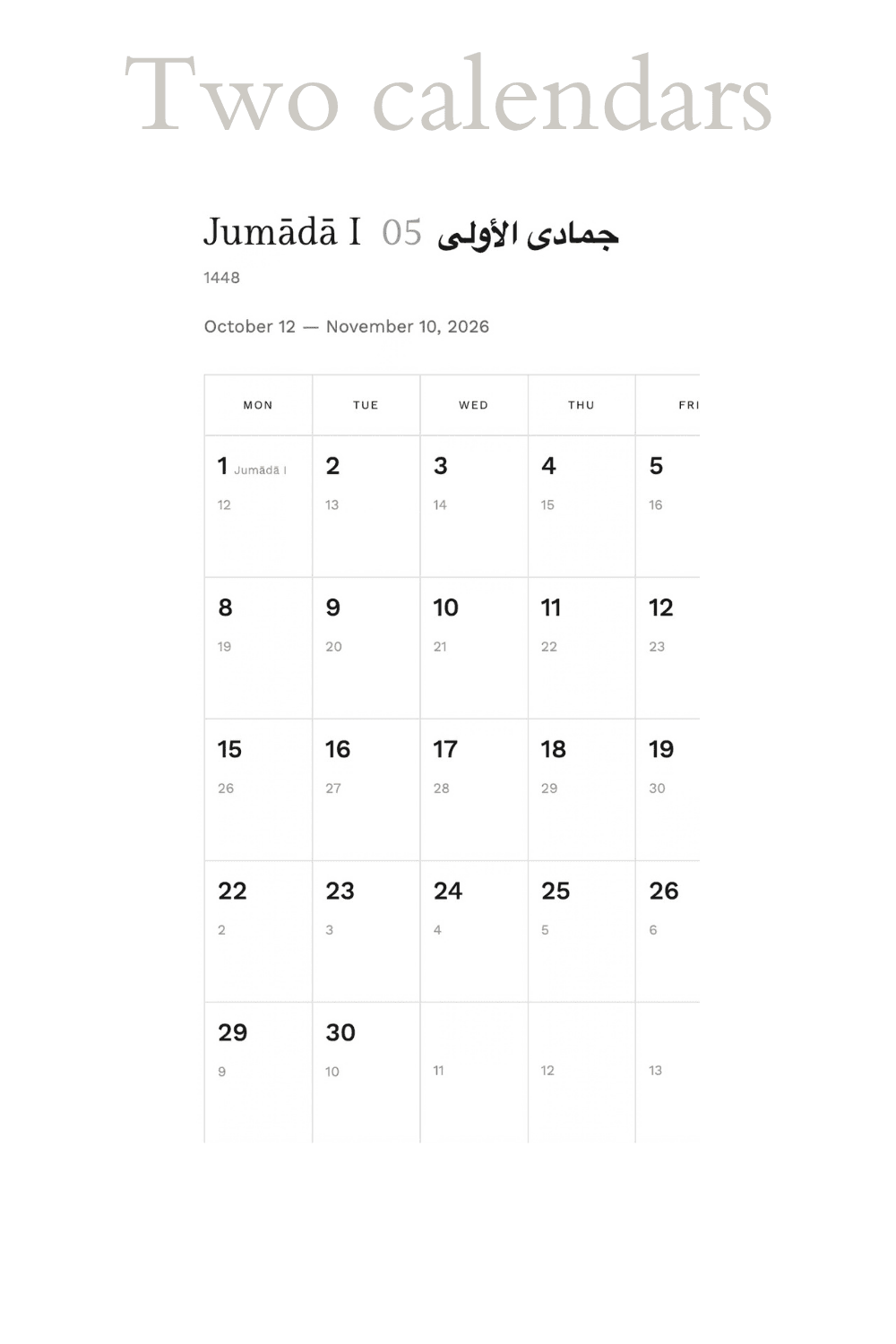
A calendar does not only measure time. It also organises attention. What it means to follow the Hijri year inside a society that runs on another one and why we built a calendar for it.
How one royal garment reveals Norman Sicily, Islamic prestige and the making of sovereignty
Manage Consent
To provide the best experiences, we use technologies like cookies to store and/or access device information. Consenting to these technologies will allow us to process data such as browsing behavior or unique IDs on this site. Not consenting or withdrawing consent, may adversely affect certain features and functions.
Functional
Always active
The technical storage or access is strictly necessary for the legitimate purpose of enabling the use of a specific service explicitly requested by the subscriber or user, or for the sole purpose of carrying out the transmission of a communication over an electronic communications network.
Preferences
The technical storage or access is necessary for the legitimate purpose of storing preferences that are not requested by the subscriber or user.
Statistics
The technical storage or access that is used exclusively for statistical purposes.The technical storage or access that is used exclusively for anonymous statistical purposes. Without a subpoena, voluntary compliance on the part of your Internet Service Provider, or additional records from a third party, information stored or retrieved for this purpose alone cannot usually be used to identify you.
Marketing
The technical storage or access is required to create user profiles to send advertising, or to track the user on a website or across several websites for similar marketing purposes.